- This topic is empty.
-
AuthorPosts
-
March 3, 2026 at 6:14 pm #33150
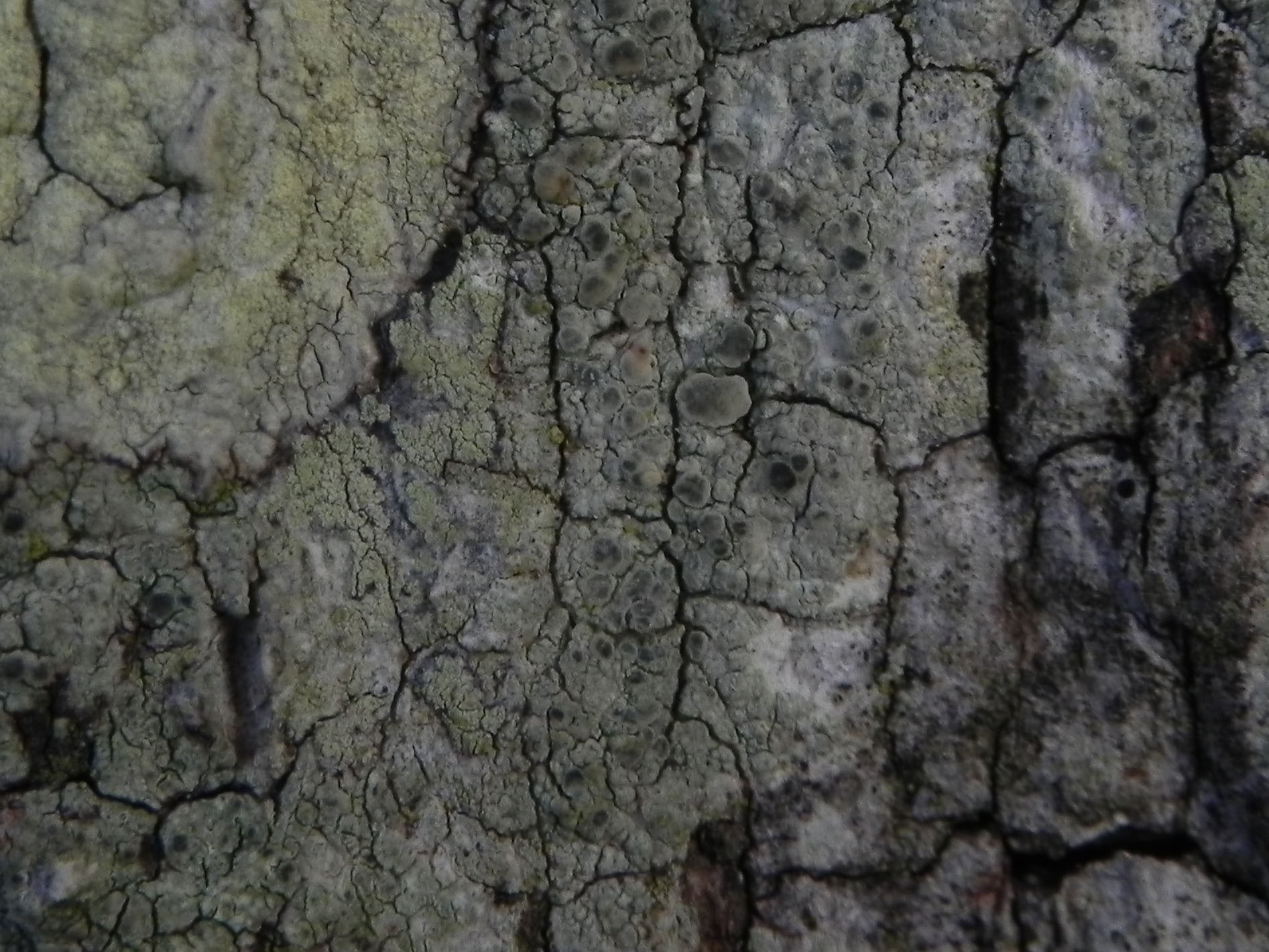
Hi everyone, I was doing an informal survey for the Castle Howard estate up in Yorkshire and when having a look at their veteran oaks I noticed this small pacth of Lecanora ~5cm across. It reminded me a bit of Lecanora sublivescens which I’ve seen at Studley Royal. I took a tiny scrap to do some microscopy on and chemcial tests, it looks to be C- and is UV dull orange. Looking at the key I think it is either Lecanora sublivescens or symmicta but I’m not extactly sure. Spores are aseptate and 10-11.6 µm x 4-5 µm. Epipthecium is colourless. Apothecia are to a maximum of 0.60 mm across.
Link to obseravtion:
https://www.inaturalist.org/observations/340780778https://www.inaturalist.org/observations/340780778” class=”bbcode_url”> March 4, 2026 at 10:48 pm #46883Kian Not easy but the important couplet in LGBI3 is:
38(35)
Thallus areolate, areoles often dispersed and sometimes reduced and obscured by apothecia, yellow-green, grey-green to pale grey ………………………………………………………………………………39
Thallus not clearly areolate, ± continuous or granular, yellowish white to yellow-green or green-black …………………………………………………………………………………………………….. 42
With 39 to
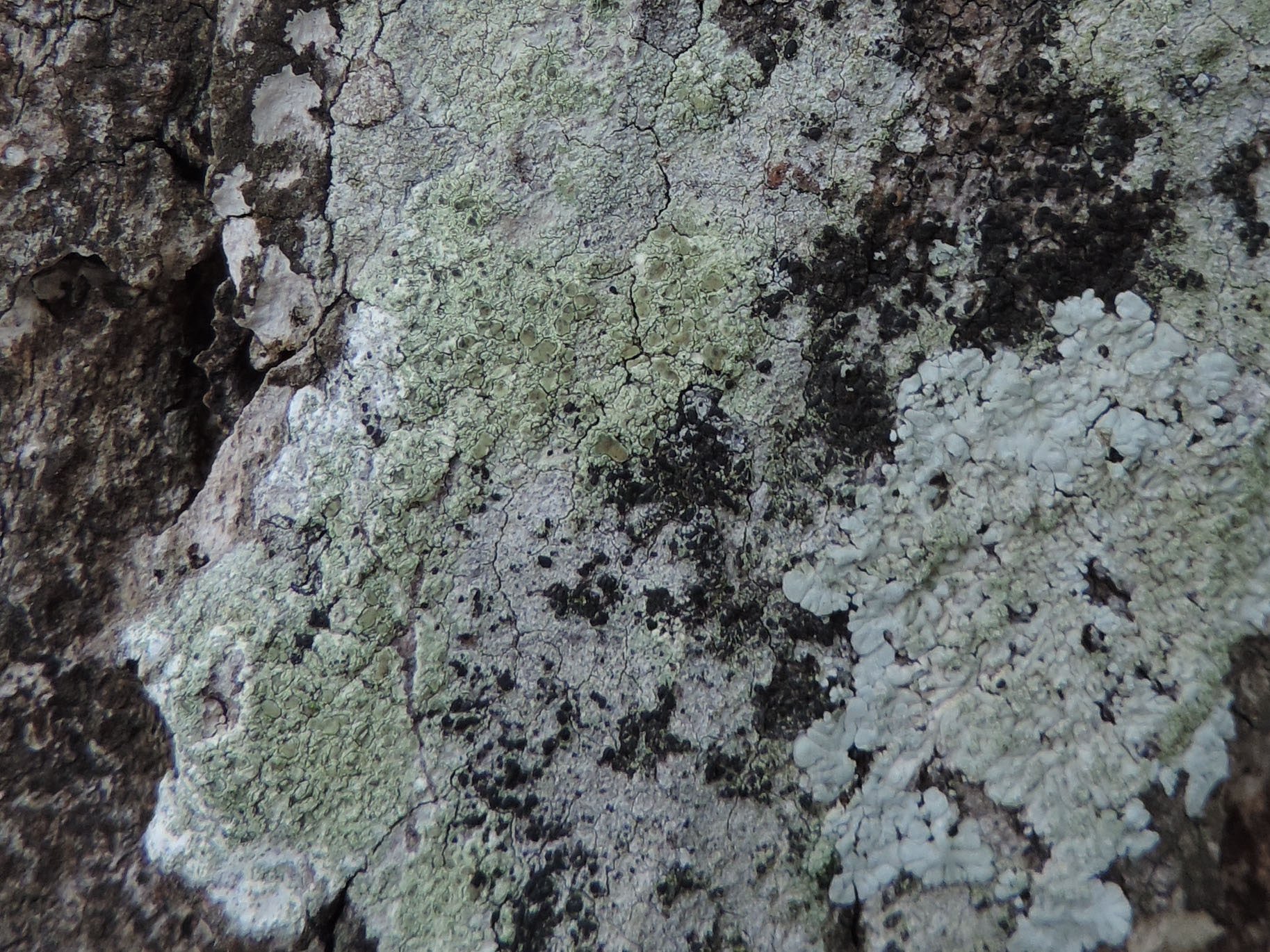
Lecanora sublivescensand 42 to Lecanora symmicta, with the most important characters bolded. These are a couple of of pictures of
Lecanora sublivescens: 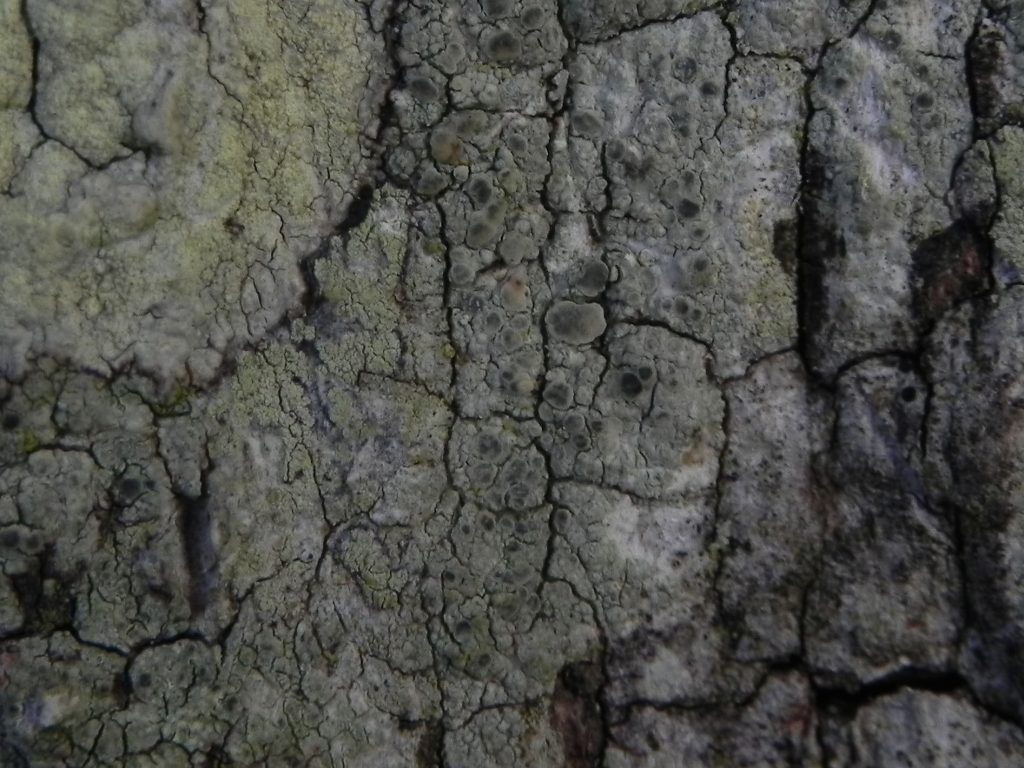
[attachment=1]2012-11-02-11.jpg[/attachment]
Gregynog Great Wood, Oak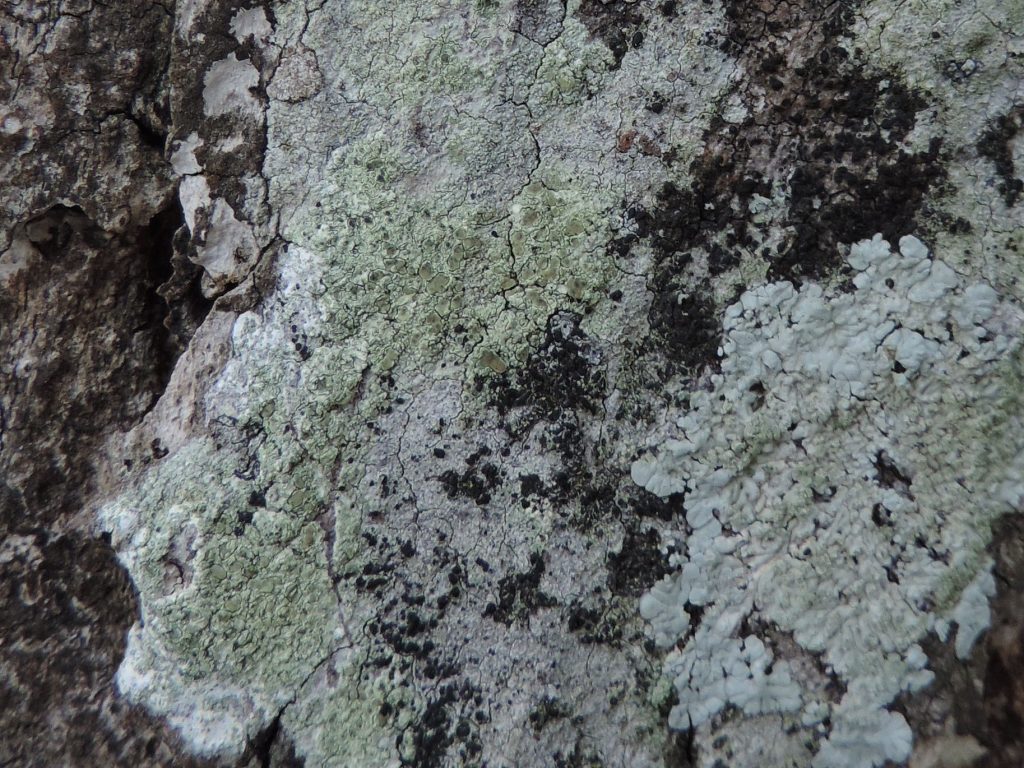
[attachment=0]2019-07-10-05.jpg[/attachment]
Knole Park, SycamoreBoth show a distinct pattern of cracking on the thallus, which is not evident in your picture (just bark cracks on this?), also the apothecia are more sunken, at at the minimum with at least some flecks of darker colour and are not round. I can see more elevated, completely pale and round apothecia in your picture that are very atypical of
Lecanora sublivescens, so I think this is Lecanora symmicta, but not 100% certain. Neil
March 4, 2026 at 11:07 pm #46884Oh yes and more name changes due. See this open access paper in the Lichenologist https://doi.org/10.1017/S0024282925101321https://doi.org/10.1017/S0024282925101321 ” class=”bbcode_url”> https://doi.org/10.1017/S0024282925101321https://doi.org/10.1017/S0024282925101321 Lecanora symmictagroup is finally being segregated as the genus Zeora. This is expected but a complication is that the earliest name for Lecanora sublivescensis Biatora straminea. The name Lecanora stramineawas already taken by what is now Myriolecis straminea. So unfortunately when moved to Zeorathe rules say Lecanora sublivescenshas to become Zeora straminea; annoying. Neil
March 5, 2026 at 2:22 pm #46885Cheers Neil, That was the couplet I was struggling with! I wasn’t sure on the spectrum is the cutoff, so that’s helpful to know. I think your right that the ones on mine are bark cracks instead. We’ll have to see if we can find some more of it in Yorkshire, it has to be at least somewhere else! And thats annoying about the next batch of name changes, lets hope Lecnoraceae settle down sometime soon.
Many thanks,
Kian
March 5, 2026 at 4:38 pm #46886Kian Yes the tree looked good!
I have put some more pictures up on the BLS site
https://britishlichensociety.org.uk/resources/species-accounts/lecanora-sublivescens ” class=”bbcode_url”> https://britishlichensociety.org.uk/resources/species-accounts/lecanora-sublivescens Quote:lets hope Lecnoraceae settle down sometime soon.
Should do, this one is not too complicated and only a few more groups need names, mainly the
Lecanora polytropagroup, the Lecanora intumescensgroup and the Lecanora albella/ Lecanora subcarneagroup, Plus the usual few orphans such as Lecanora alboflavida. Neil
April 10, 2026 at 2:46 pm #46887Hi Neil, I have some more Lecanora sublivescens for you, this time from Duncombe Park, North York Moors. I just want to confirm that I’m on the right track if that’s OK? These ones have a much more areolate crust. I counted it on three trees (all oak), two with only one or two small thalli and one with perhaps enough to cover a couple of A4 sheets. We’re hoping to go back at some point soon and check the rest of the parkland as we had some other nice species too (Psammina stipitata, Bellicidia incompta, Anisomeridium ranunnculosporum, Xylographa parella, Chaenothecopsis nigra etc.)
Links to iNaturalist records with photos:
https://www.inaturalist.org/observations/345875503https://www.inaturalist.org/observations/345875503” class=”bbcode_url”> https://www.inaturalist.org/observations/345875532https://www.inaturalist.org/observations/345875532” class=”bbcode_url”> https://www.inaturalist.org/observations/345875510https://www.inaturalist.org/observations/345875510” class=”bbcode_url”> April 10, 2026 at 5:48 pm #46888Kian Yes well done, the second and third links look great. The first appears to be mixed up with something granular, but the others are good.
Now the most northerly British record
Neil
April 10, 2026 at 8:55 pm #46889Yh the first record is the main tree where there was lots mixed with Pyrrhospora quernea, Cliostomum griffithii, Pertusaria coccodes and Dendrographa decolorans. Just to check are you saying that the first record is correct but the L sublivescens is mixed with something else or that is not Lecanora sublivescens and is instead some other Lecanora? Many many thanks,
Kian
April 10, 2026 at 9:02 pm #46890Kian Yes the first is fine, it was just a bit messy to confirm from a photo. From your list it was the
Pyrrhospora querneawas what was making a bit difficult to be sure what was going on! Neil
-
AuthorPosts


- You must be logged in to reply to this topic.