
Corticolous Lecanora, no crystals
- This topic is empty.
-
AuthorPosts
-
April 8, 2025 at 10:08 am #33024
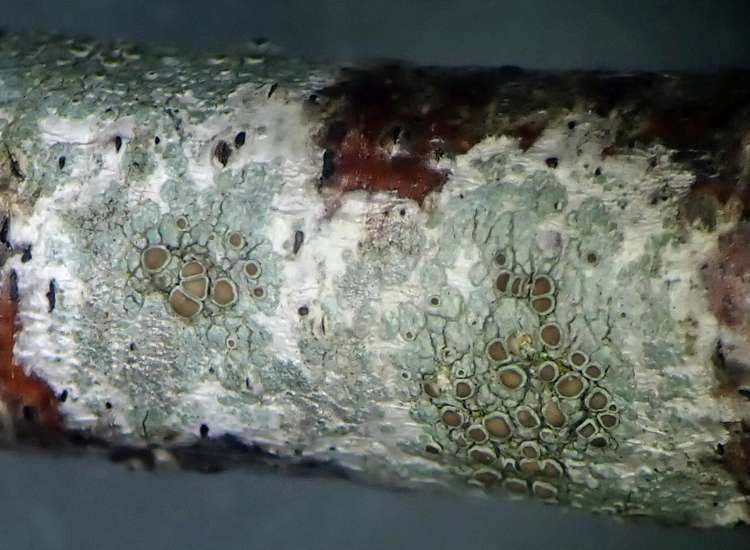
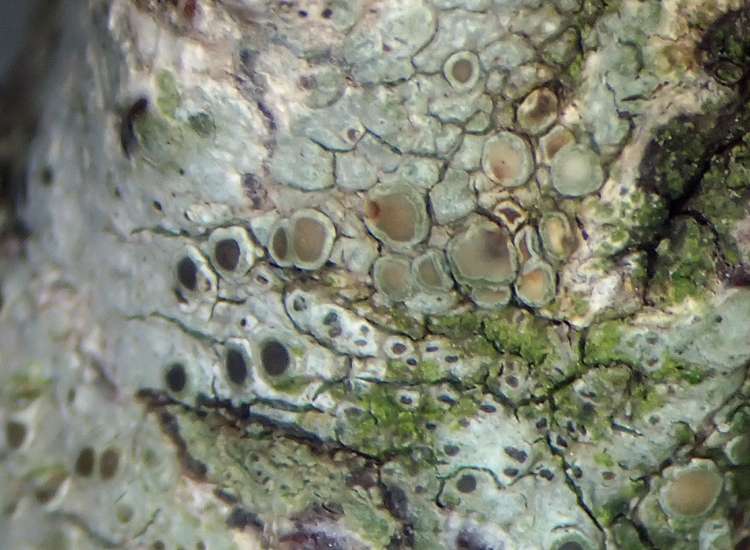
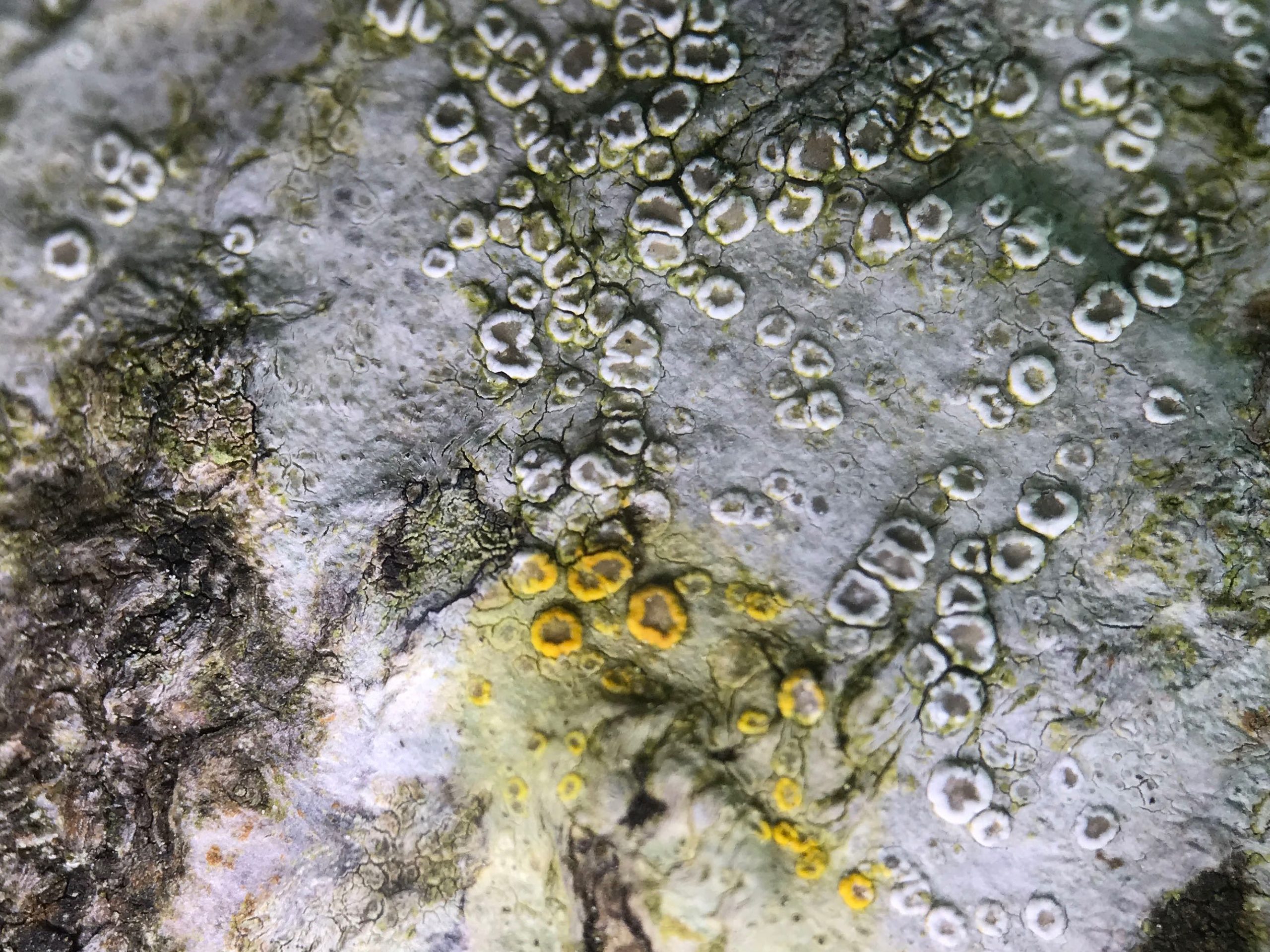
I’m struggling to identify some Lecanora found on a thin Birch branch in Dorset and the lack of large crystals in the margins plus granules descending into the hymenium seems odd. So far I’ve examined four different thalli, all +/- cracked / areolate, bluish-grey and with a whitish +/- fimbriate prothallus, C-, K+ yellow, Pd uncertain but Pd/UV pale yellow. (First try at mixing Steiner’s so might have got the proportions wrong)
[attachment=9]z Lecanora Q4 250402 026.jpg[/attachment] 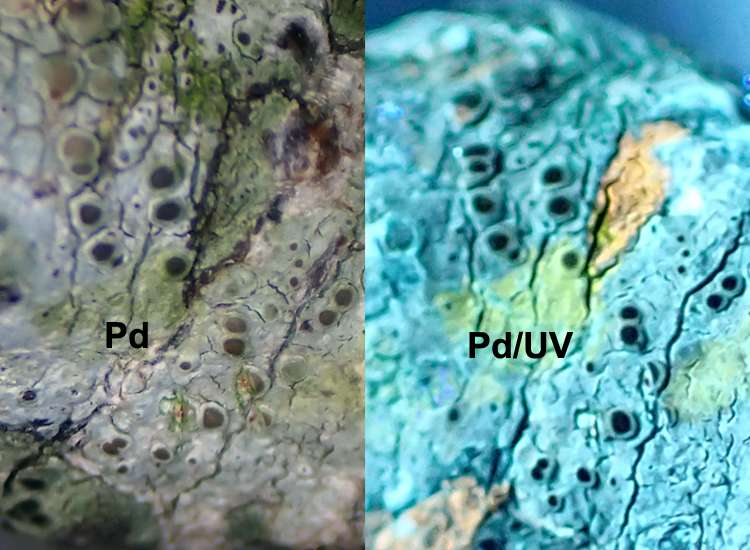
[attachment=8]zz Lecanora Q3 250402 008 P,PUV.jpg[/attachment] Apothecia range in colour from (mainly) mid-brown to slightly mottled or (one thallus) with both mid-brown and dark blackish-brown apothecia. Asci 8-spored, in K the spores were mainly 11-12.5 x 5-6 µm.
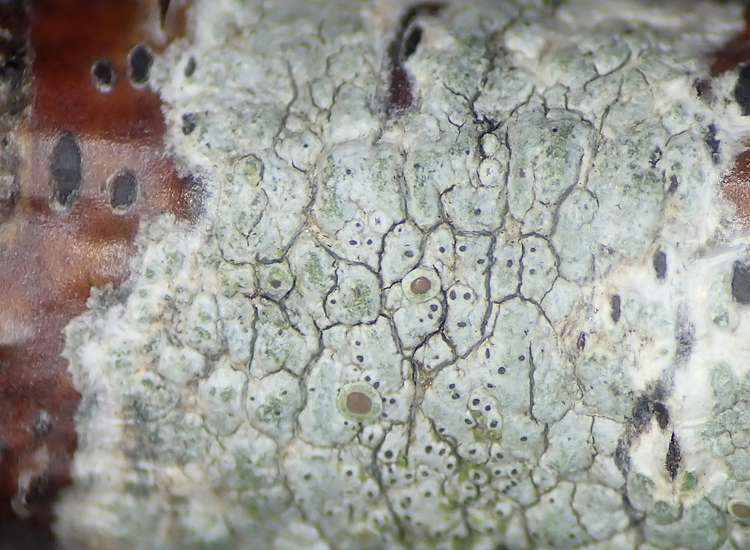
One thallus had few apothecia but abundant pycnidia, the conidia mainly curved.
[attachment=7]z Lecanora Q2 pycnidia 250402 028.jpg[/attachment] 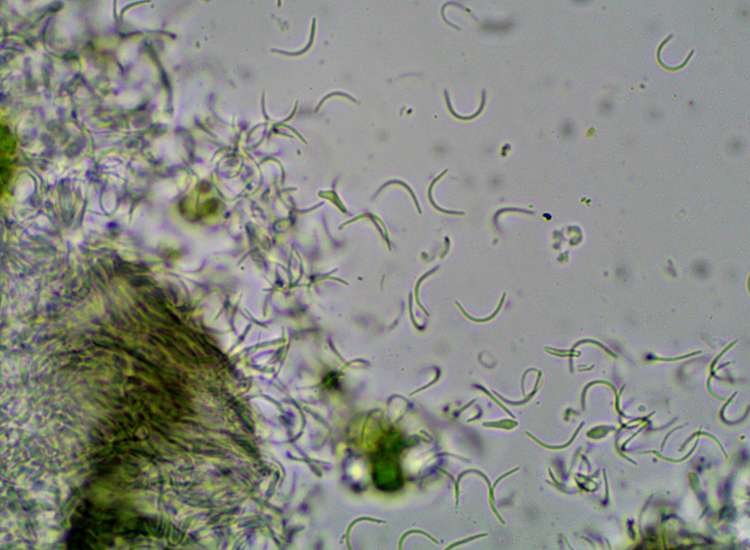
[attachment=6]z Lecanora Q2 conidia 250402-2.jpg[/attachment] When I examined sections in water under polarised light all had abundant granules in the epithecium descending between the apothecia but no large crystals in the margins. In ten sections from four thalli only two had some small crystals visible.
[attachment=5]z Lecanora Q3 250402 041.jpg[/attachment] 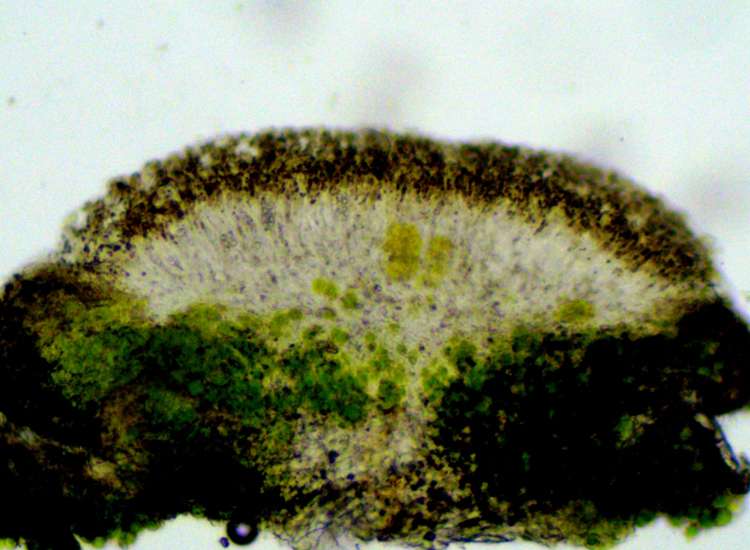
[attachment=4]z Lecanora Q3 250402-1.jpg[/attachment] 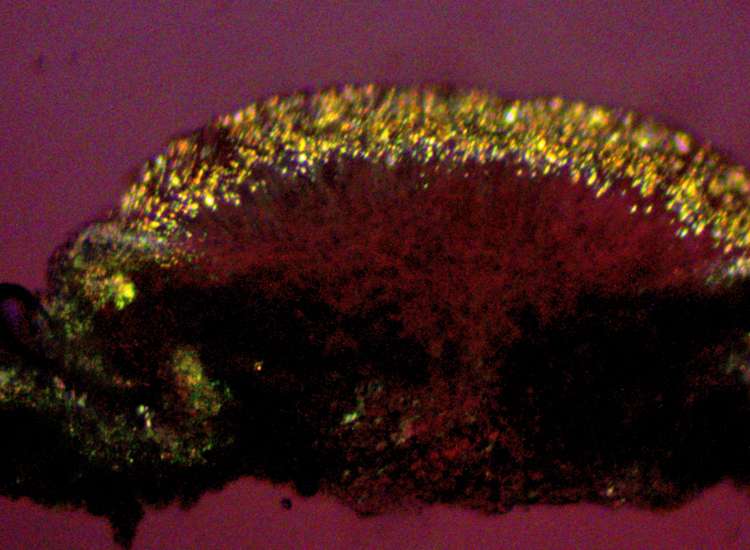
[attachment=3]z Lecanora Q3 250402-1b.jpg[/attachment] 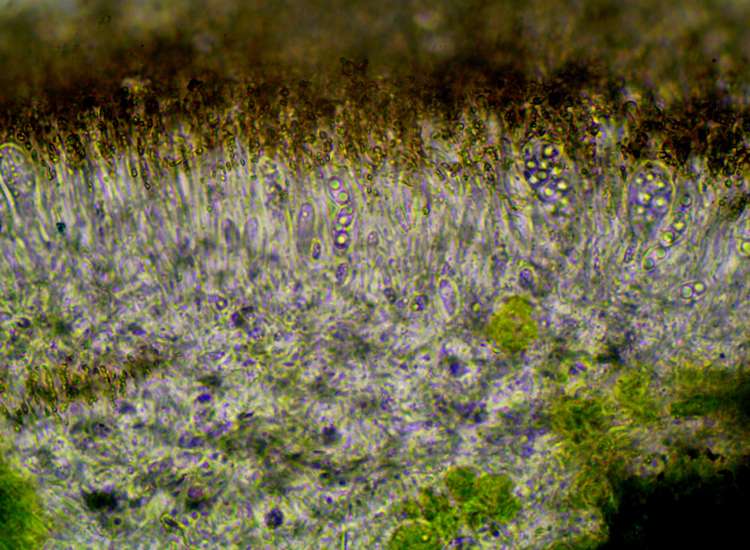
[attachment=2]z Lecanora Q3 250402-2c.jpg[/attachment] 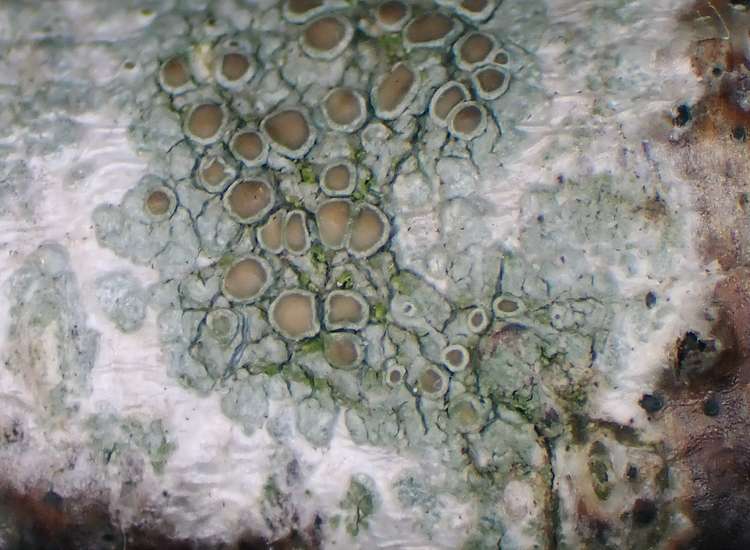
[attachment=1]z Lecanora Q4 250402 032.jpg[/attachment] 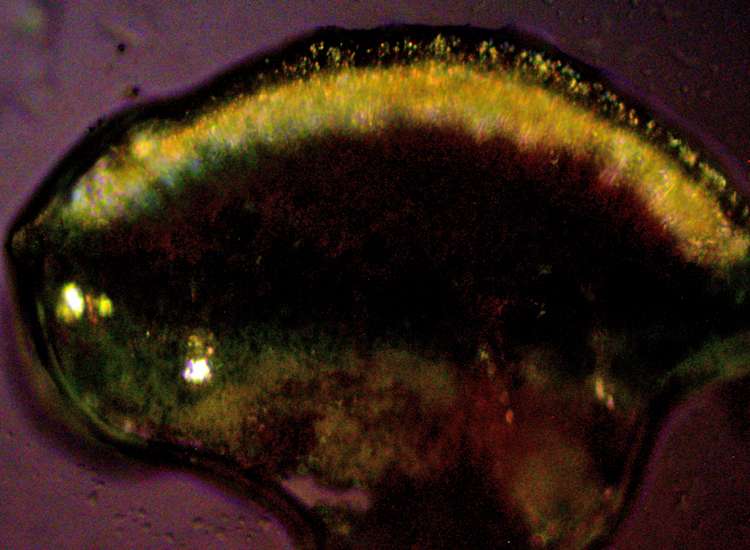
[attachment=0]z Lecanora Q4 250402-1b.jpg[/attachment] Any thoughts and comments would be much appreciated!
Lecanora intumescens appears closest but doesn’t entirely fit so I began to wonder if, despite the very highly unlikely location, it might possibly perhaps be Lecanora caledonica (link below) – or (more likely) that I’ve missed something obvious
https://www.cambridge.org/core/journals/lichenologist/article/lecanora-caledonica-a-new-species-in-the-lecanora-intumescens-group-lecanoraceae-from-northwestern-europe/B06AB5CE3D7830A518AA748413D031BF ” class=”bbcode_url”> https://www.cambridge.org/core/journals/lichenologist/article/lecanora-caledonica-a-new-species-in-the-lecanora-intumescens-group-lecanoraceae-from-northwestern-europe/B06AB5CE3D7830A518AA748413D031BF April 8, 2025 at 11:02 am #46559Dear Jenny — Fascinating! — I’ve recently had the same experience.
My specimen was on a 35-year-old wooden bench near playing fields on a large school site in Hertfordshire. It featured coarse POL+ granules in the epithecium, but not descending into the hymenium. There were large POL+ calcium oxalate crystals in the amphithecium, but like you I found them only in a minority of sections.
I assume that the abundance of these amphithecial crystals reflects the amount of calcium that the lichen is absorbing from air, water and substrate. My understanding is that many lichens sequester excess calcium in the form of extracellular calcium oxalate crystals — some small or even invisible, and some large, as in the
Lecanoraspecies in question. Apparently, calcium oxalate crystals are stable in water, so the calcium doesn’t diffuse through the lichen tissues where it could cause damage. So perhaps your lichen and mine weren’t dealing with a large enough load of calcium from the environment to produce many calcium oxalate crystals?
On that assumption, I’ve identified my lichen as
Lecanora chlaroterasens. str. (a couple photos on Bluesky at https://bsky.app/profile/aspenecology.com/post/3lm3pmmxa322z ” class=”bbcode_url”> https://bsky.app/profile/aspenecology.com/post/3lm3pmmxa322z And similarly, I’d suggest your lichen is probably
L. hybocarpaauct. br. All that said, after a quick Google search, I wasn’t immediate able to find any literature specifically studying abundance of amphithecial calcium oxalate crystals in
Lecanorarelative to environment or habitat. I’d be keen to hear if anyone knows more about this! Best regards,
Anthony
April 8, 2025 at 8:26 pm #46560Jenny Any big crystals present in the margin indicates a big crystal species,
Lecanora hybocarpain your case, and both your sections have some bigger crystals. They also seem to lack the dense masses of small crystals that are present in small crystal species such as Lecanora horiza. The pale yellow Pd reaction is a standard atranorin spot test reaction;
Lecanora intumescenshas a strong bright yellow with a tinge of orange on the margins (it has psoromic acid as well as atranorin), that are always swollen and, if looked at closely, decorticate. 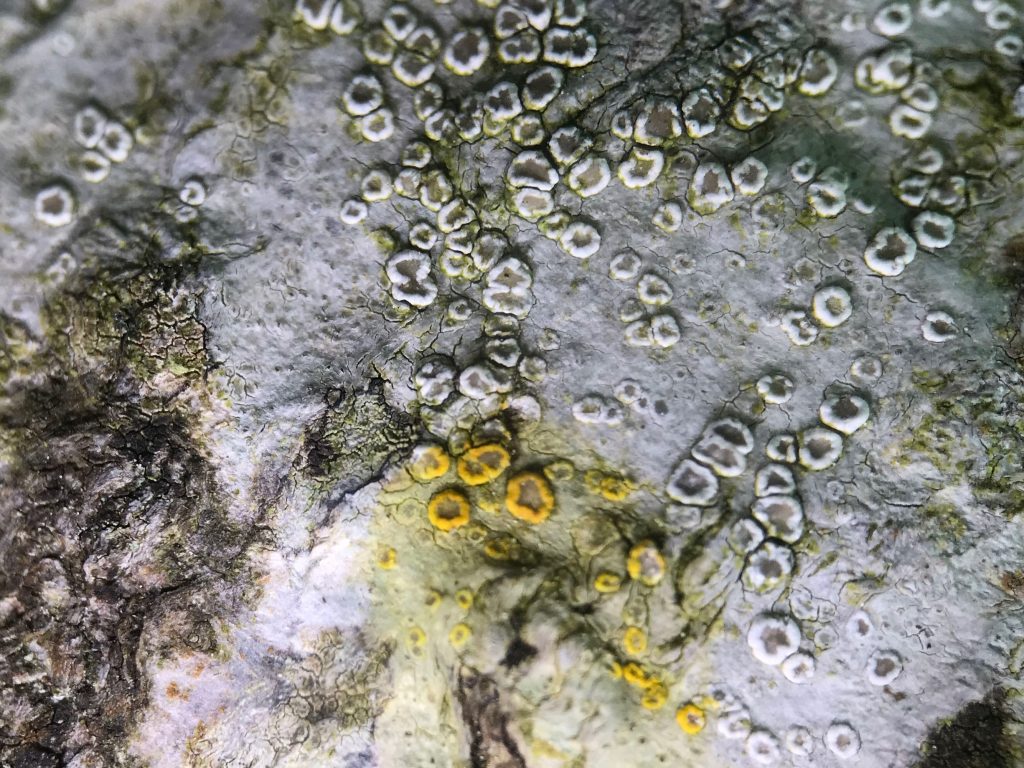
[attachment=0]2020-05-18-02.JPG[/attachment]
Lecanora intumescensPd reaction, on old Beech, by Ashurst Lodge, New Forest It should be in Dorset, so worth looking out for, I am finding it more in the New Forest, either it is recovering from acidifying pollution or I am getting better at spotting the somewhat smaller forms we have down in the south. See
https://britishlichensociety.org.uk/resources/species-accounts/lecanora-intumescens ” class=”bbcode_url”> https://britishlichensociety.org.uk/resources/species-accounts/lecanora-intumescens Anthony
Congratulations on the
Lecanora chlaroteras. str. It is frequent enough in clean air areas, but seems rare in more nitrogen rich areas. I can not help with what is causing more or less crystals, but there are also forms with an abundance of really big crystals causing rough knobbly margins. These were called
Lecanora rugosella, i.e. Lecanora chlaroteras. str. with big crystals. However, some were certainly also Lecanora subrugosai.e. Lecanora argentatawith big crystals, as I have collected this, but this was never recognised on the British list, before being put into synonym with Lecanora argentata. Interestingly Aspen bark is a good place to find these big crystal forms, so is Aspen bark rich in calcium? Neil
April 8, 2025 at 10:39 pm #46561Dear Neil — Many thanks for this. It’s very helpful to know that the diagnostic character is the simple presence of large calcium oxalate crystals in the thalline margin, not anything to do with their abundance.
Very interesting to hear that
Lecanoraon aspen tend more often to have exceptionally large crystals in the thalline margin. As it happens, aspen is known to accumulate large amounts of calcium relative to other trees, particularly in the bark. So maybe there’s something to it. Most of the papers on calcium in aspen that I could find via Google are hidden behind paywalls. Sadly, I couldn’t even access many of them through the UEA with which I’m affiliated. But this limited preview of a 1999 PhD thesis gives a flavour — see particularly page 6:
https://www.proquest.com/openview/2bdba7f79221e6c1c624433eaa975418/1?cbl=18750&diss=y&pq-origsite=gscholar ” class=”bbcode_url”> https://www.proquest.com/openview/2bdba7f79221e6c1c624433eaa975418/1?cbl=18750&diss=y&pq-origsite=gscholar The aspen tree in that study is the North American species
Populus tremuloides, not the European species P. tremula. But some of the papers I couldn’t access, and which seemed to discuss calcium content in aspen, were published in the Nordic Pulp & Paper Research Journal. Apparently, aspen (presumably P. tremula) is a particular source of problems of mineral build-up and scaling in paper-making processes and machinery in the Nordic region. Grateful for your kind words about my find of
L. chlaroteras. str. It was a surprise: I was expecting L. hybocarpaauct. br.! Perhaps I shouldn’t have been: I was already surprised to find
L. albellaon the same bench. First for Hertfordshire since 1966, and second for the county. Probably worth a second opinion, come to think of it! In case you’re interested, a few days ago I posted some photos on Bluesky at: https://bsky.app/profile/aspenecology.com/post/3llr5n4xqxk2d ” class=”bbcode_url”> https://bsky.app/profile/aspenecology.com/post/3llr5n4xqxk2d There were quite a few
L. pulicaristhalli on the bench as well. Best regards,
Anthony
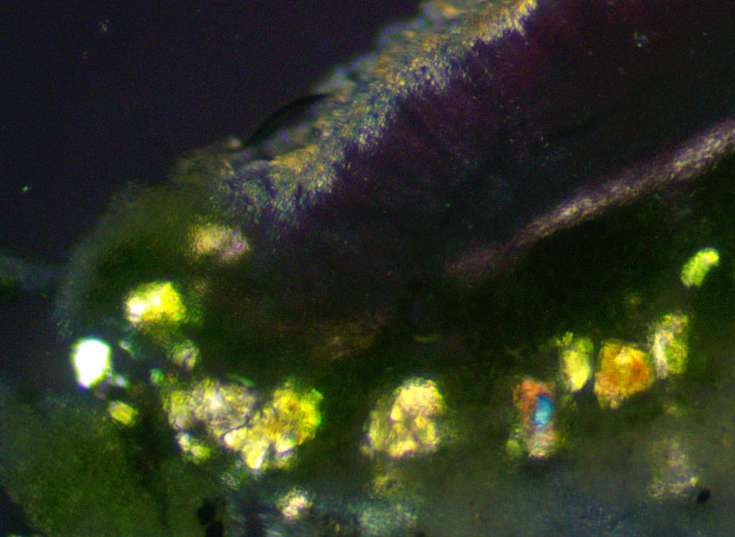
April 10, 2025 at 4:32 pm #46562Thank you both for your replies, and very interesting that Anthony has also come across specimens with few or no large crystals in the margins. These are the size/abundance of crystals I usually find in hybocarpa thalli (below), which is why I’d hoped they were something else!
[attachment=0]z Lecanora hybocarpa DN.jpg[/attachment] -
AuthorPosts


- You must be logged in to reply to this topic.