- This topic is empty.
-
AuthorPosts
-
April 5, 2025 at 12:25 pm #33021
Hello, I’m a first-time poster and quite new to looking a lichens. I’ve been looking at stubble lichens on oaks in my local area (Argyll) and finding Calicium lenticulare quite often. I’ve been trying out K UV spot tests in the field as a way of splitting C. lenticulare from everything else – the emerald green when wet (dries to sulphur yellow) is very bright and can be seen in daylight with a low powered UV torch, but I got equivocal results on this tree from Kilfinan, Cowal. 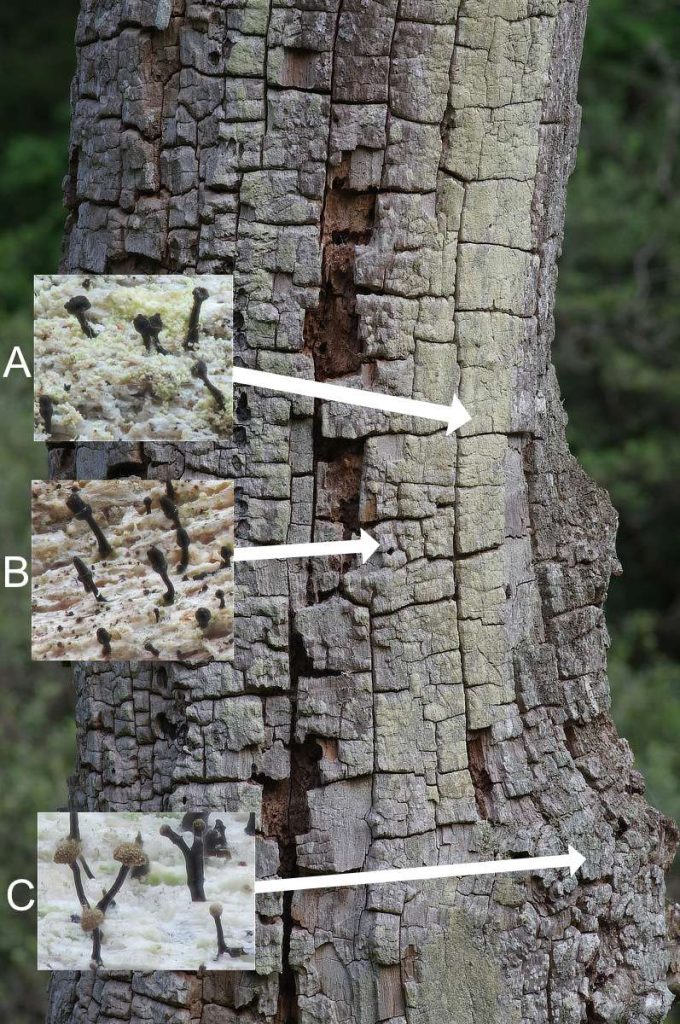
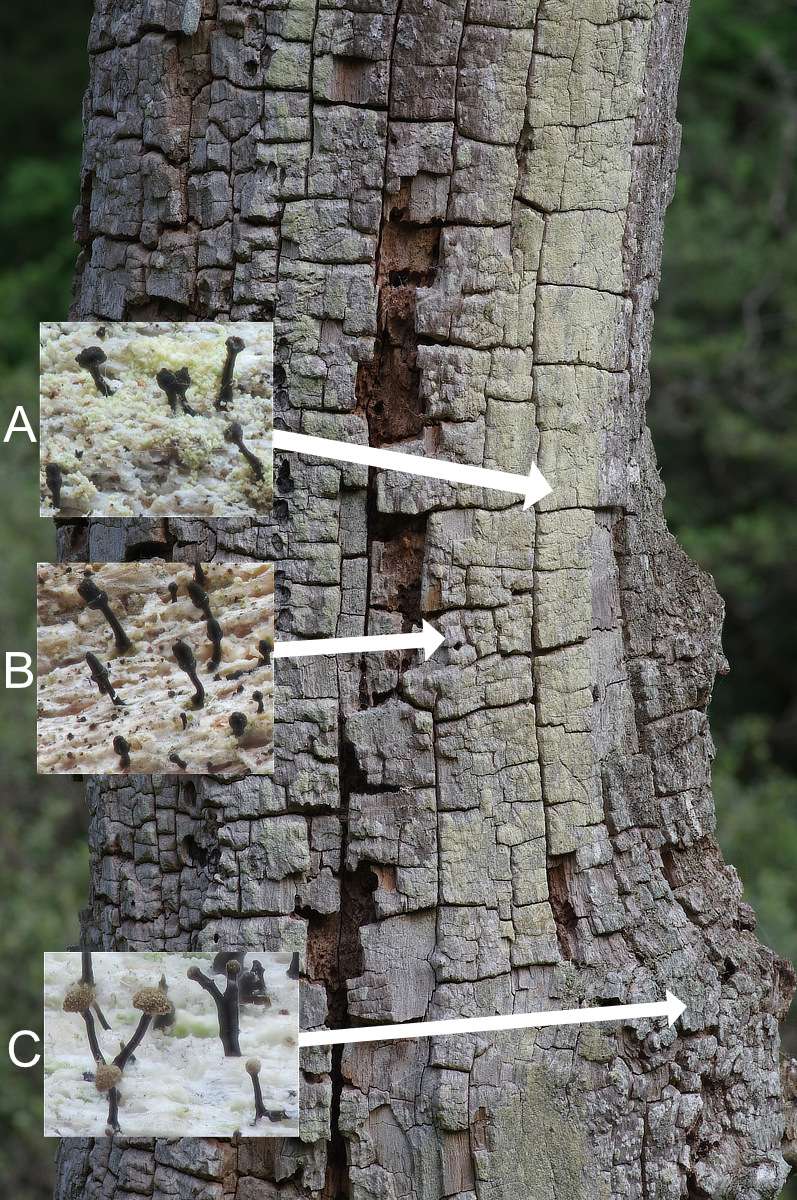
[attachment=8]CaliciumTreeK3QA6560.jpg[/attachment] This is a standing, dead, decorticated oak trunk viewed from the South-east; pervailing weather is from the South-West.There are black-headed calicium-like ascomata in a continuous zone running up the trunk; the zone delimited by the pale yellow and surrounding white patches of lignum (A and

______________
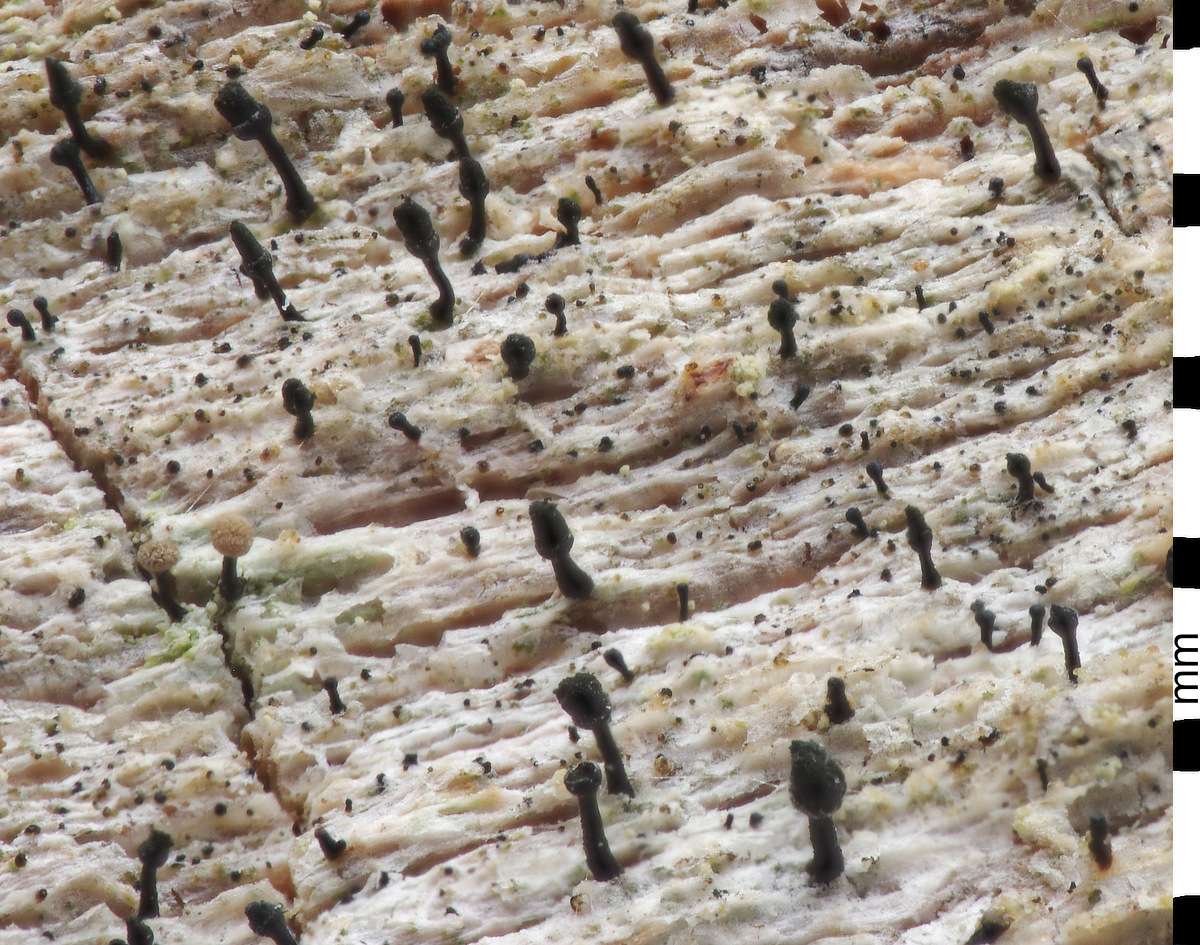
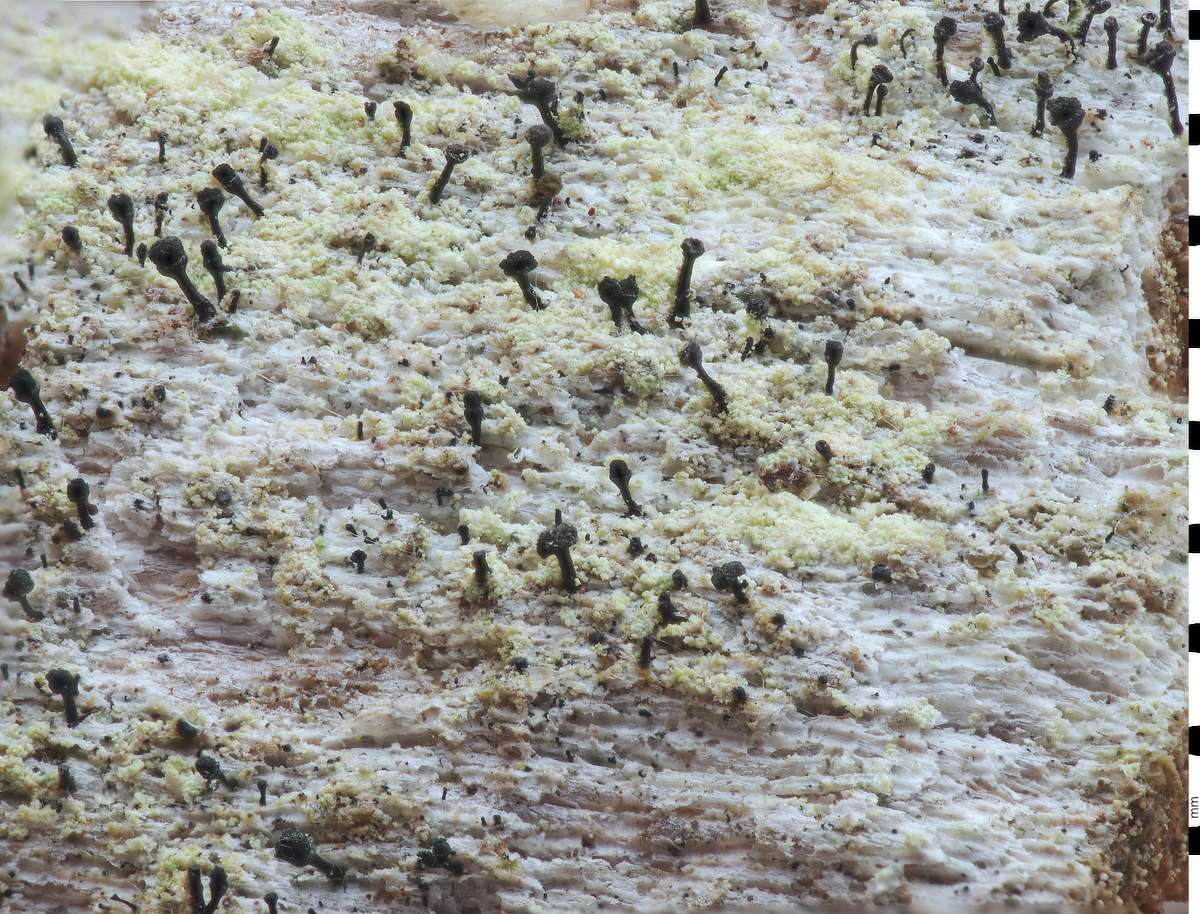
I collected a sample from one of the white areas surrounding the yellow stripe. Black-headed ascomata on a thin, white thallus. A specimen taken from here had the following characteristics:
C-
K+ (blackens) stains tissue paper dirty yellow.
KC-
UV-
Stipe:
I (lugol) squash test on stipe – does not turn blue.
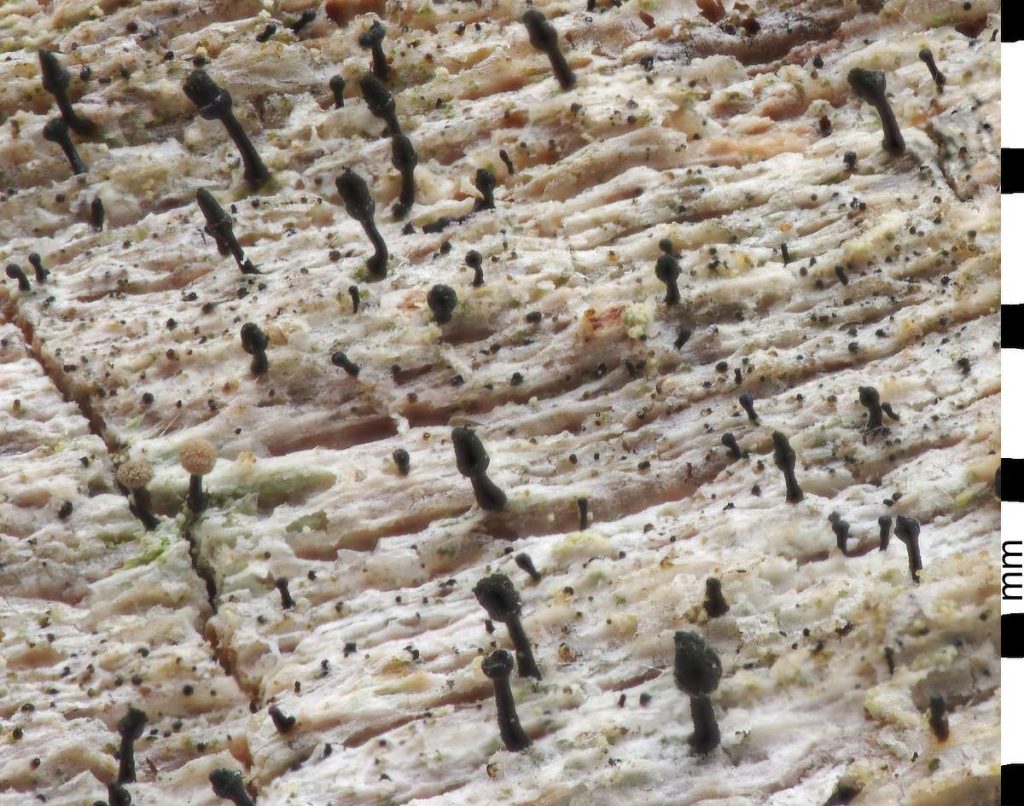
[attachment=7]B_CaliciumGlaucellumK3QD2265-85.jpg[/attachment] 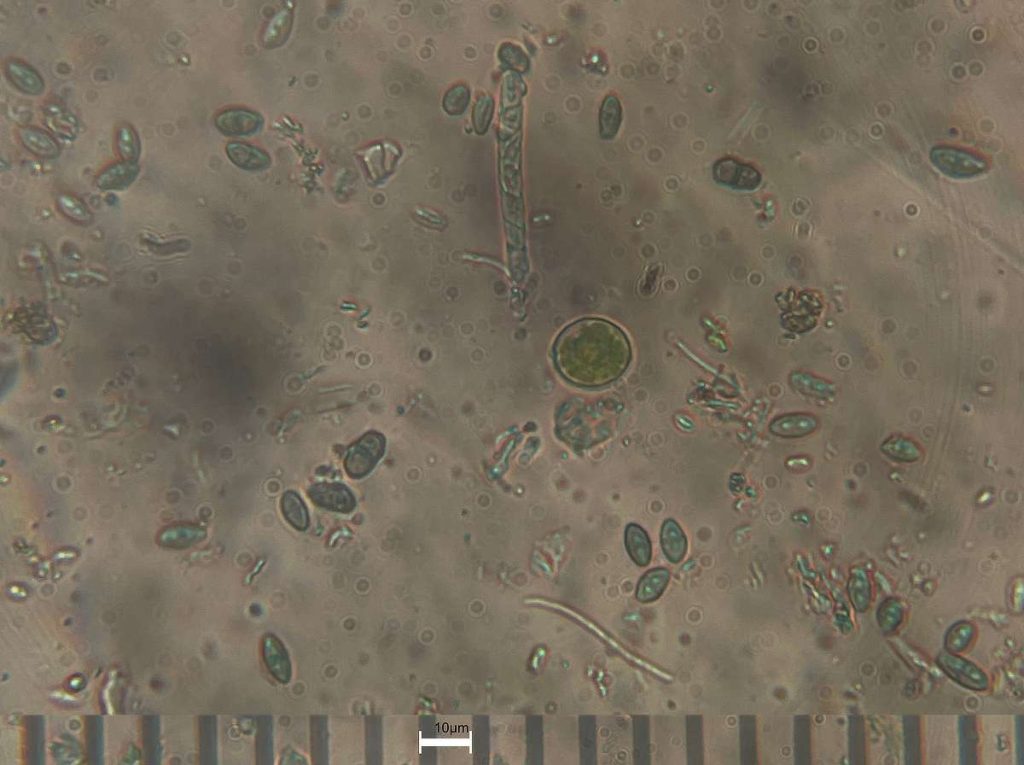
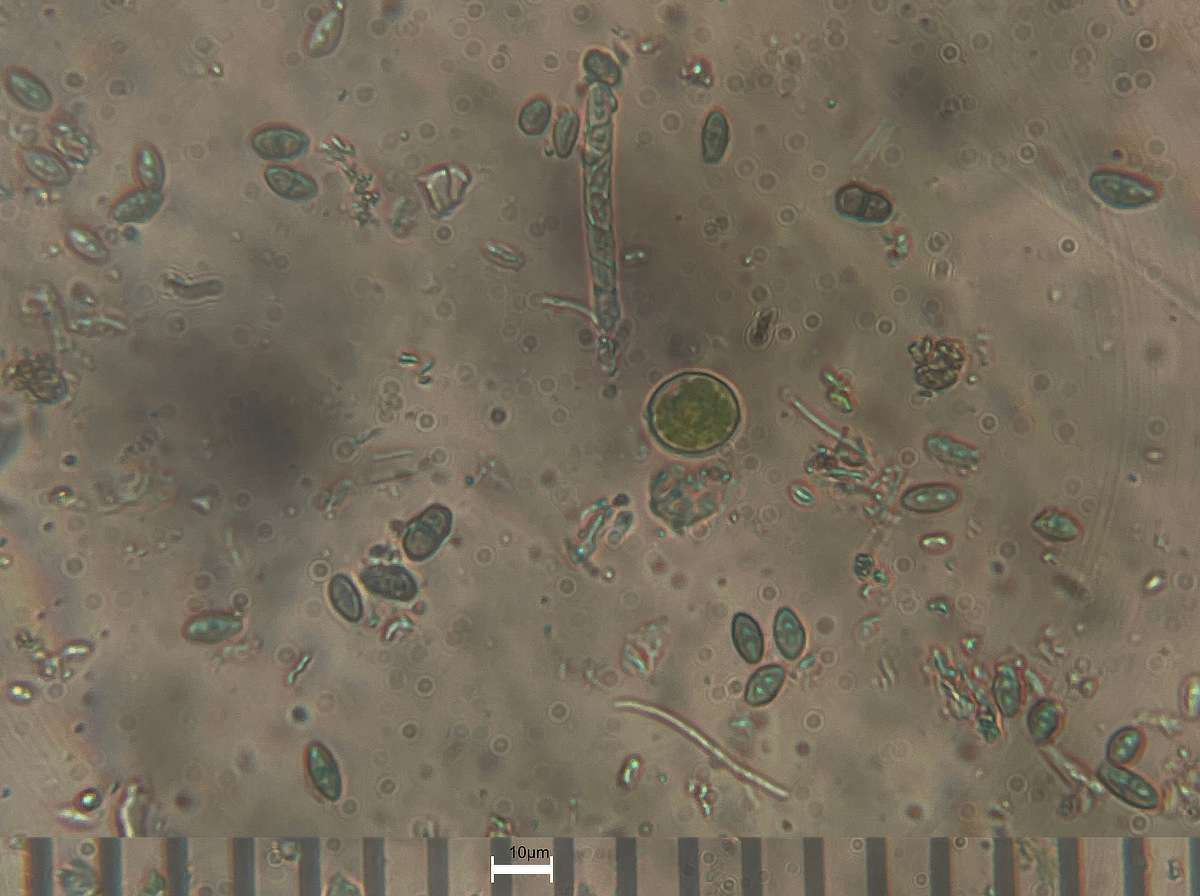
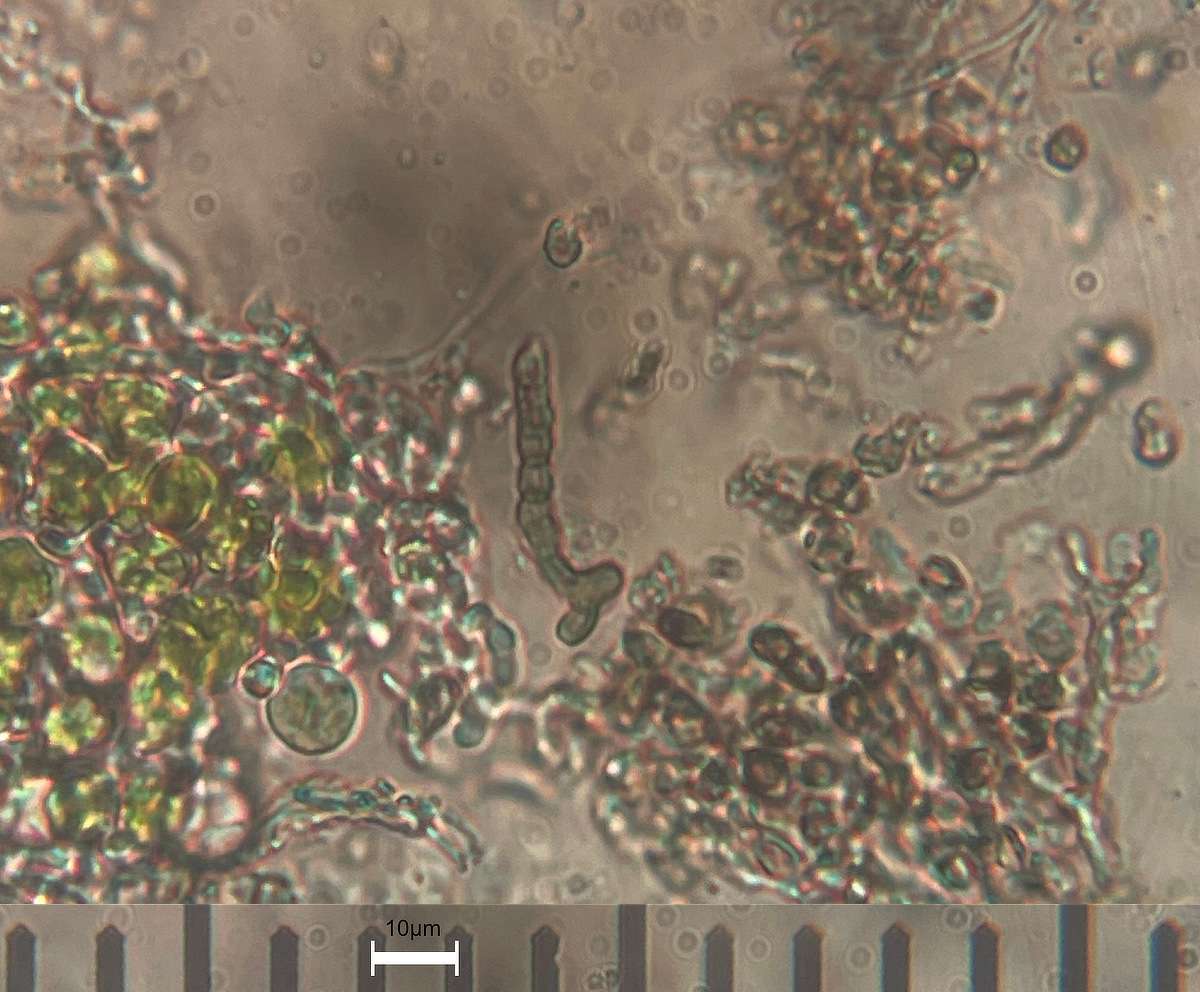
[attachment=6]B_Ascus_photobiont_IMG_1473.jpg[/attachment] 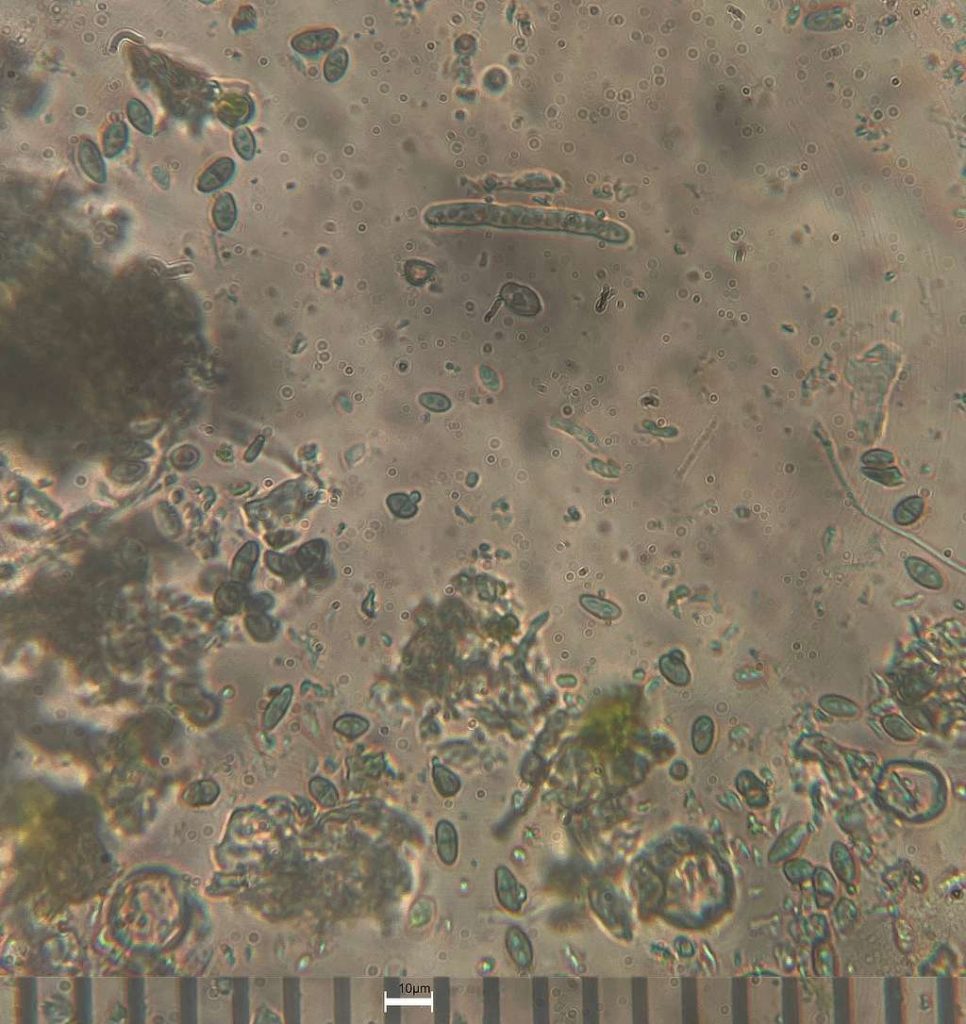
[attachment=5]B_ascus_photobiont_IMG_1477.jpg[/attachment]
_________I’d noted the yellow granular crust nearby with more ascomata on it. K UV field test was green, but dim enough to be hard to see on an overcast day.
(A) from the yellow stripe. Black-headed ascomata over a pale yellow-green granular crust.
Crust:
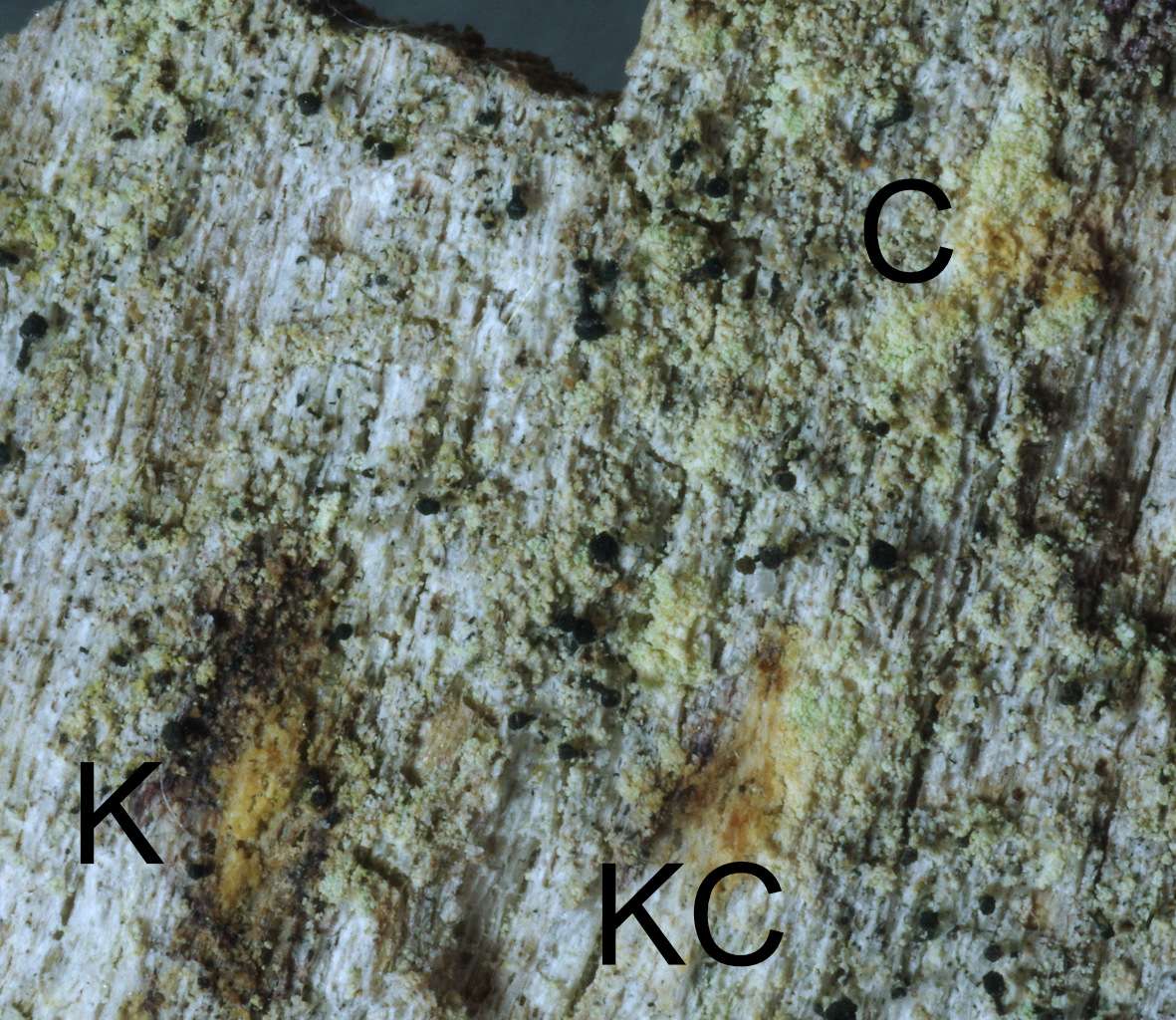
C+ orange
K+ (blackens) stains tissue paper yellow, drying russet.
KC+ orange
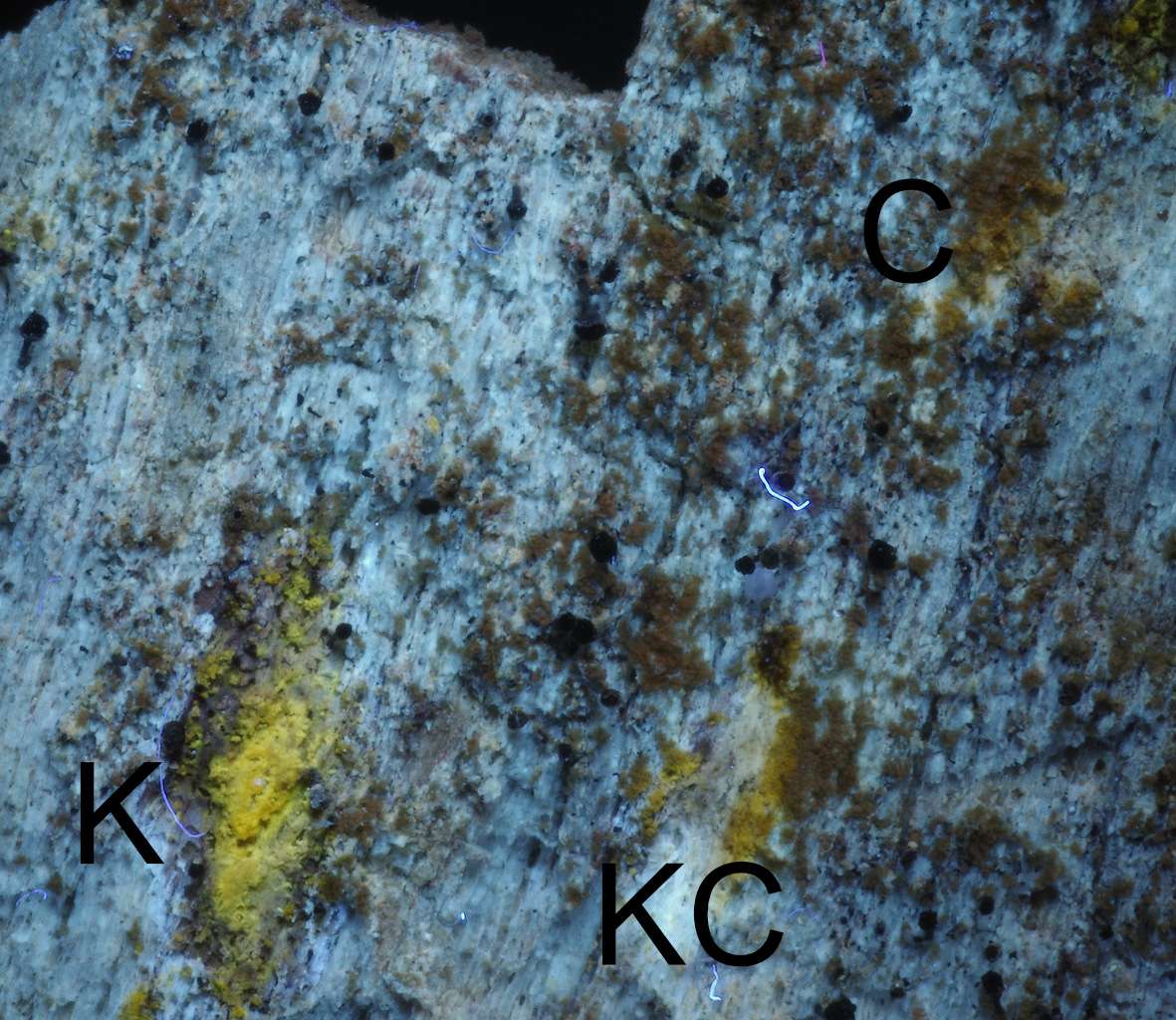
UV+ orange
UV K(wet)+ green, drying yellow
Stipe:
I (lugol) squash test on stipe – does not turn blue.
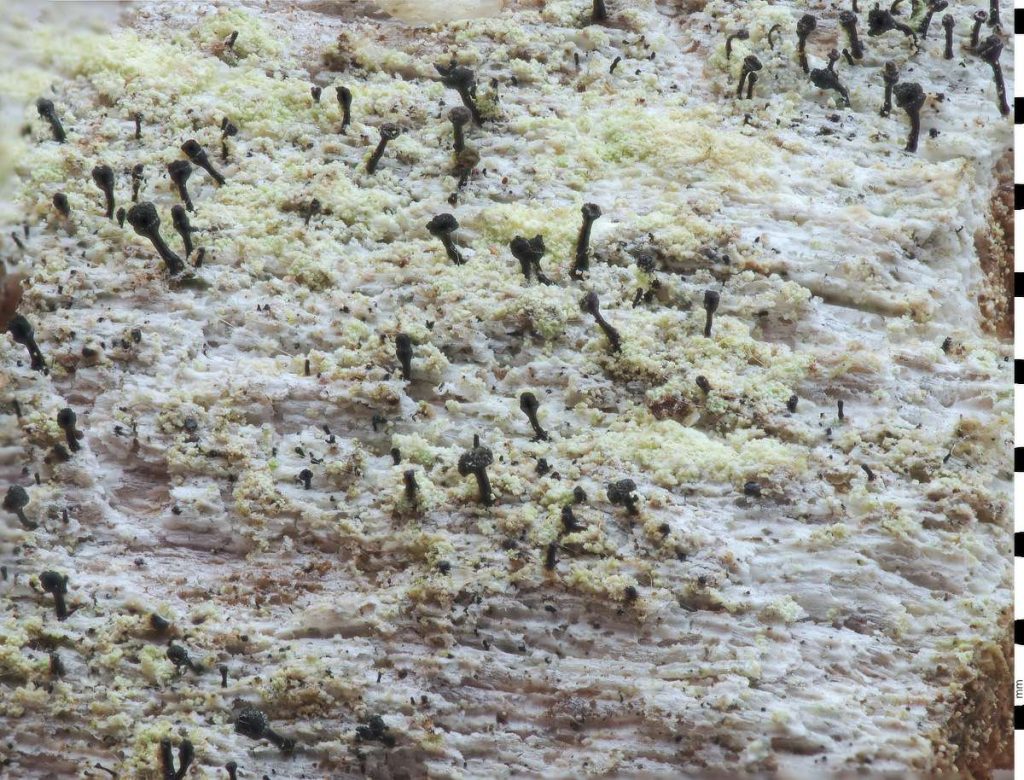
[attachment=4]A_CaliciumSpK3QD2287-326.jpg[/attachment] 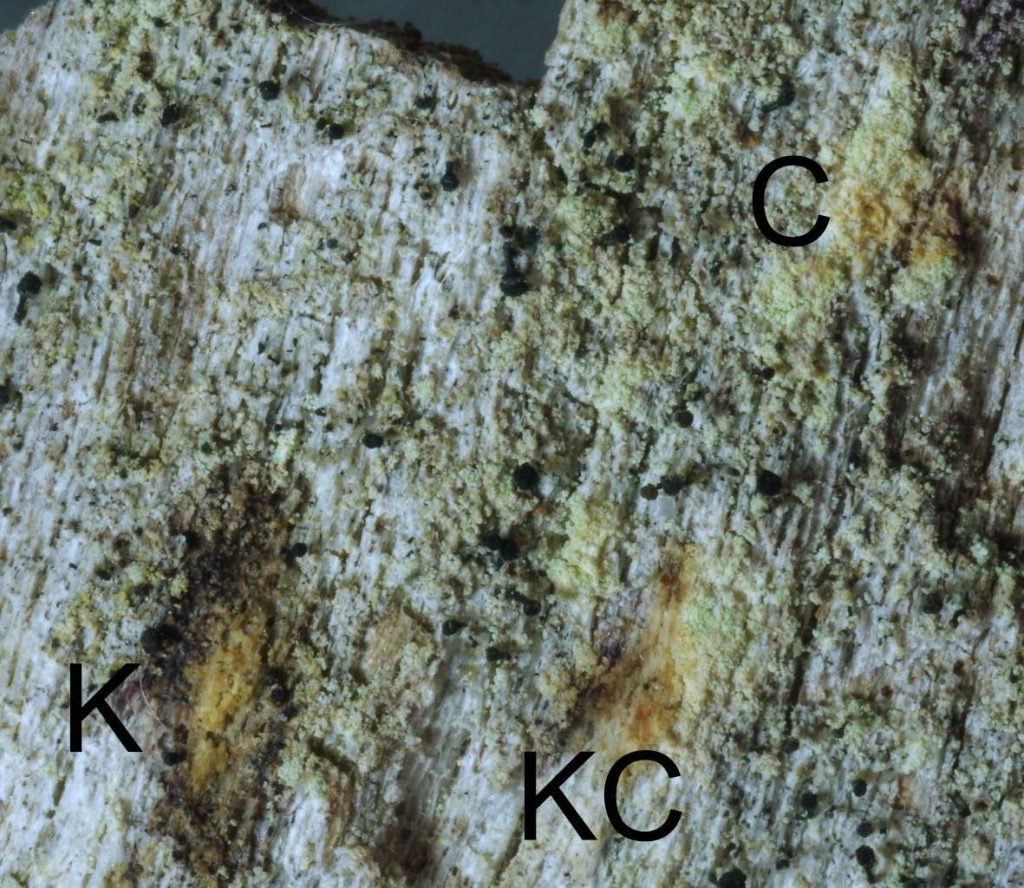
[attachment=3]A_SpotTests_K3QD7295.jpg[/attachment] 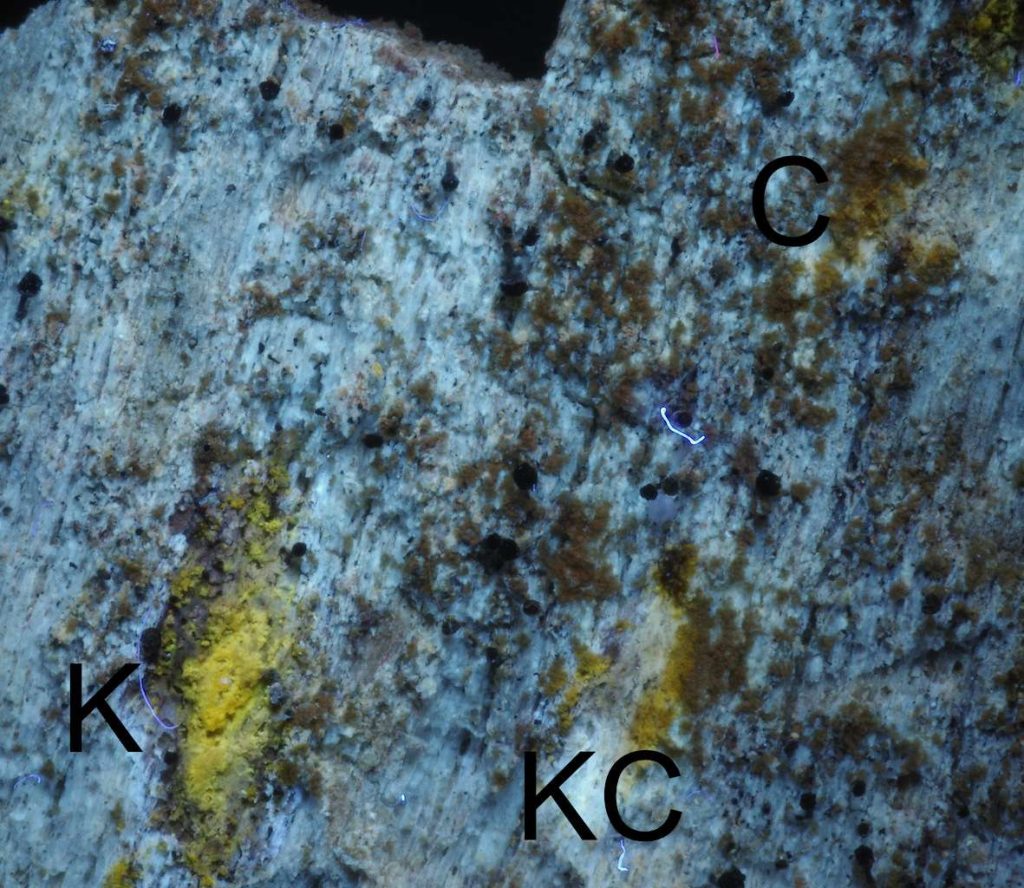
[attachment=2]A_SpotTests_UV_K3QD7296.jpg[/attachment] 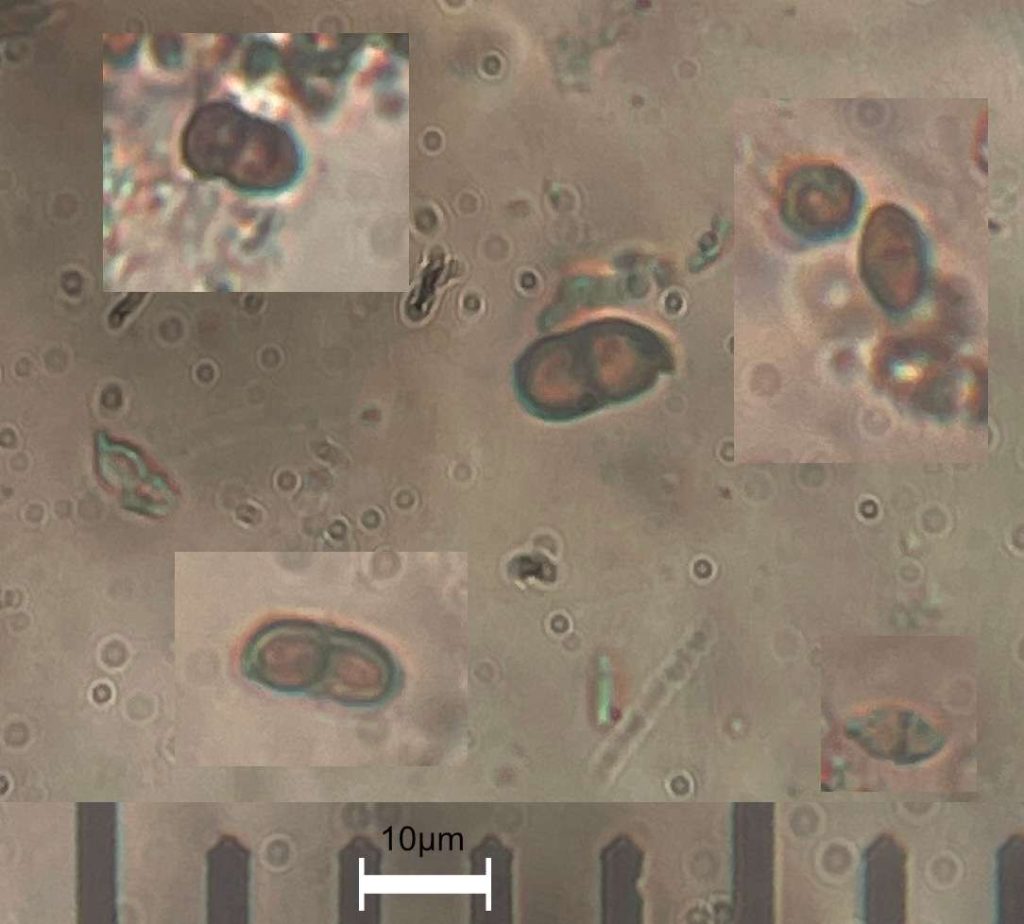
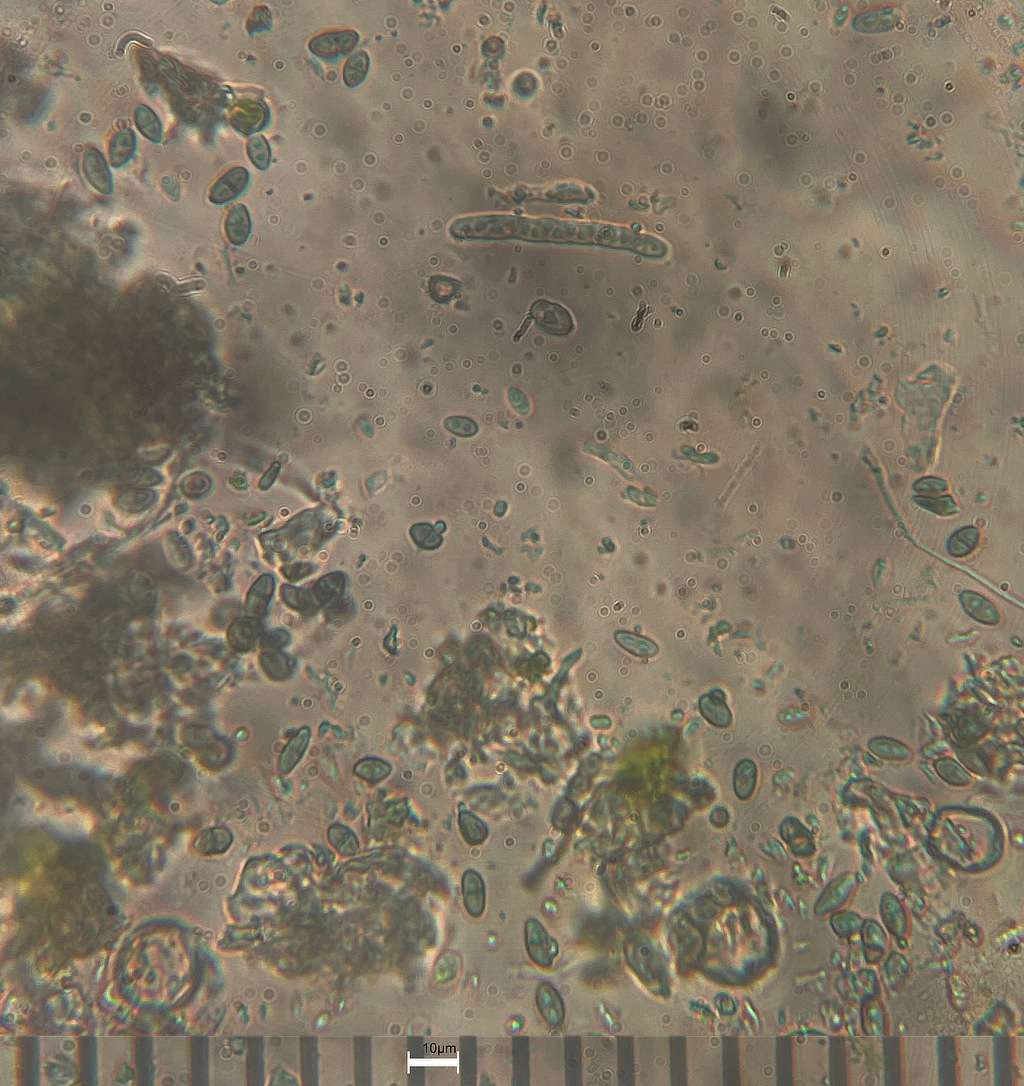
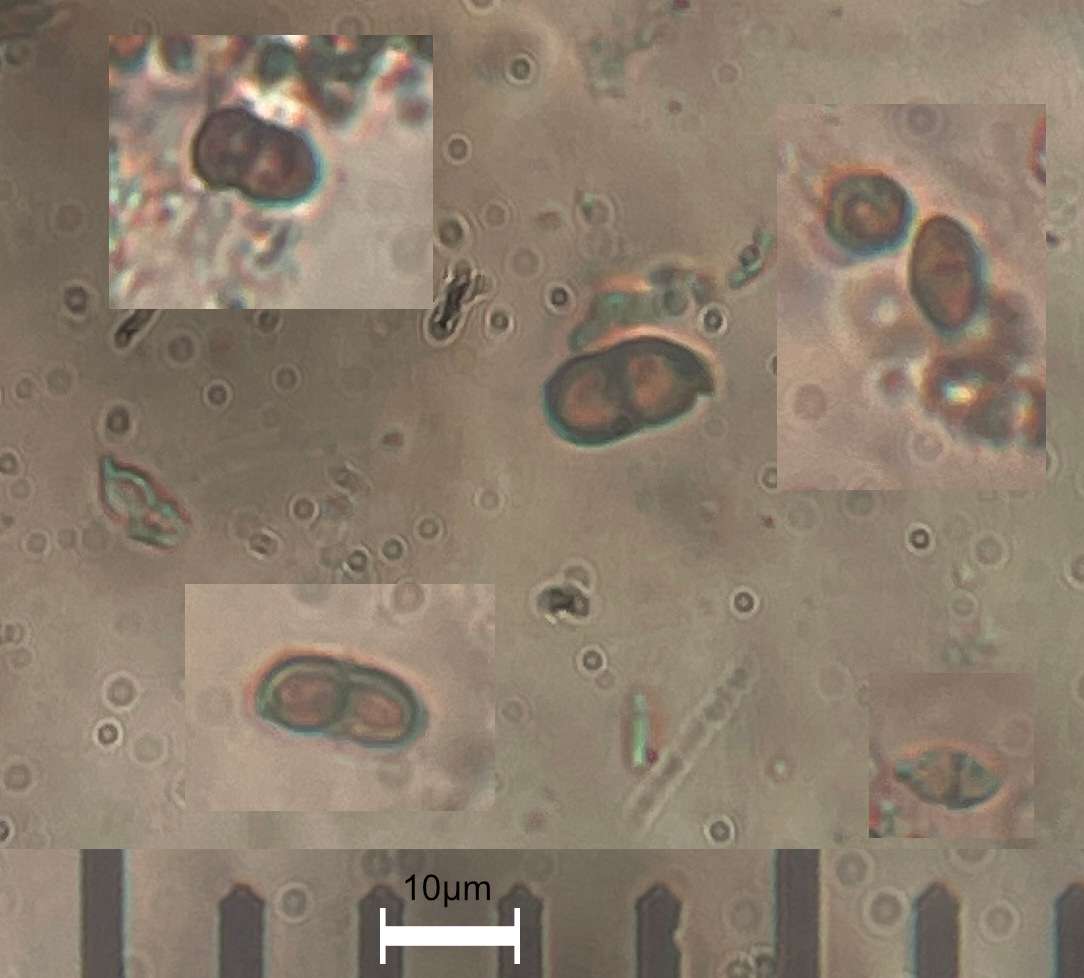
[attachment=1]A_spores_IMG_1468.jpg[/attachment] 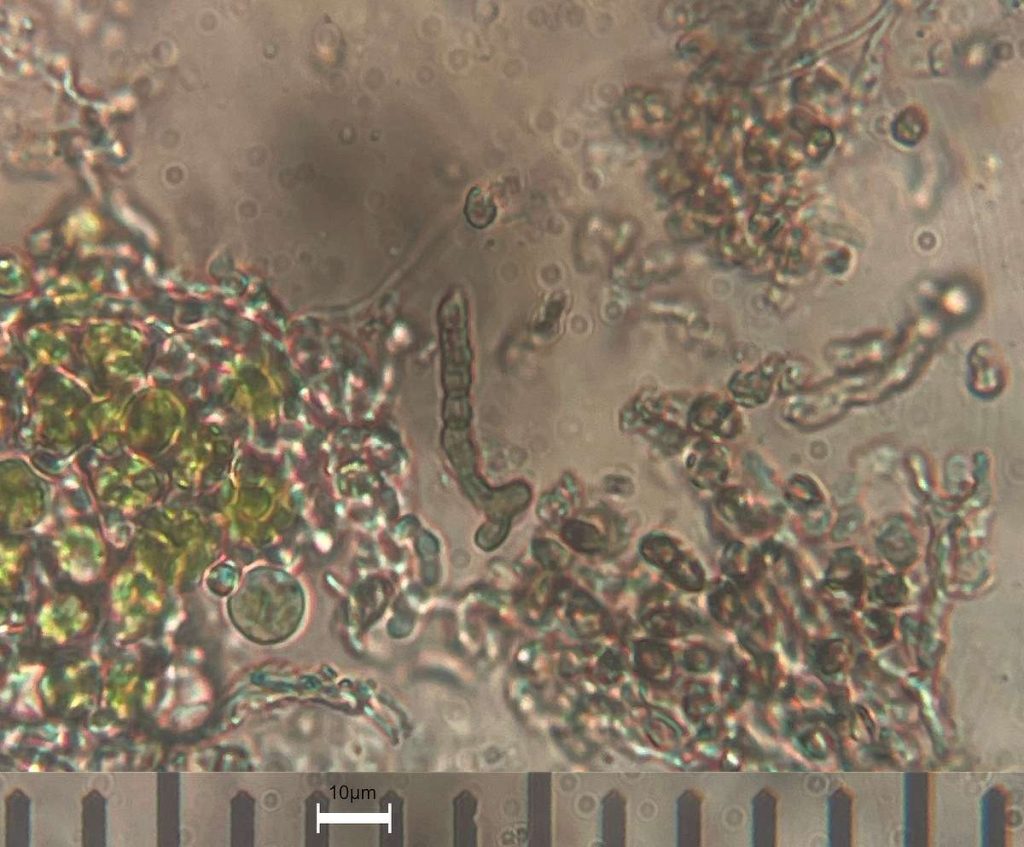
[attachment=0]A_ascus_IMG_1461.jpg[/attachment] ______
I’m wondering whether I have two species growing right next to each other, or just one. Working through the BLS key gets me to B -> Calicium glaucellum and A -> Calicium hyperelloides, but I’m not really sure. Any help / advice appreciated.
April 7, 2025 at 2:13 pm #46554Ben Yes that is two separate lichens. The pinhead is very likely to be
Calicium glaucellumThe lichen is a yellow sorediate crust. Likely either
Lecanora expallensor Chrysothrix flavovirens. Both are UV+ orange, but the latter will be C– and the Lecanora expallensC+ orange and has a typical xanthone K/UV(wet)+ yellow-green, drying yellow fluorescence. So likely Lecanora expallens, although Chrysothrix flavovirensis very typical of the habitat This morning I had a go in the field on a dog walk this morning and interestingly
Chrysothrix flavovirenshas a K/UV(wet)+ bright yellow fluorescence, without any hint of green (not seen dry yet), which I have not noted before. This species has rhizocarpic acid, so might be a useful test. All the best
Neil
-
AuthorPosts


- You must be logged in to reply to this topic.