Forums › Forums › Fungi ID requests (post here if you aren’t sure what type of fungus you’ve found) › AliMD Oak Bug Milk Cap or Birch Milk Cap or something else?
- This topic is empty.
-
AuthorPosts
-
February 10, 2023 at 5:20 pm #32562
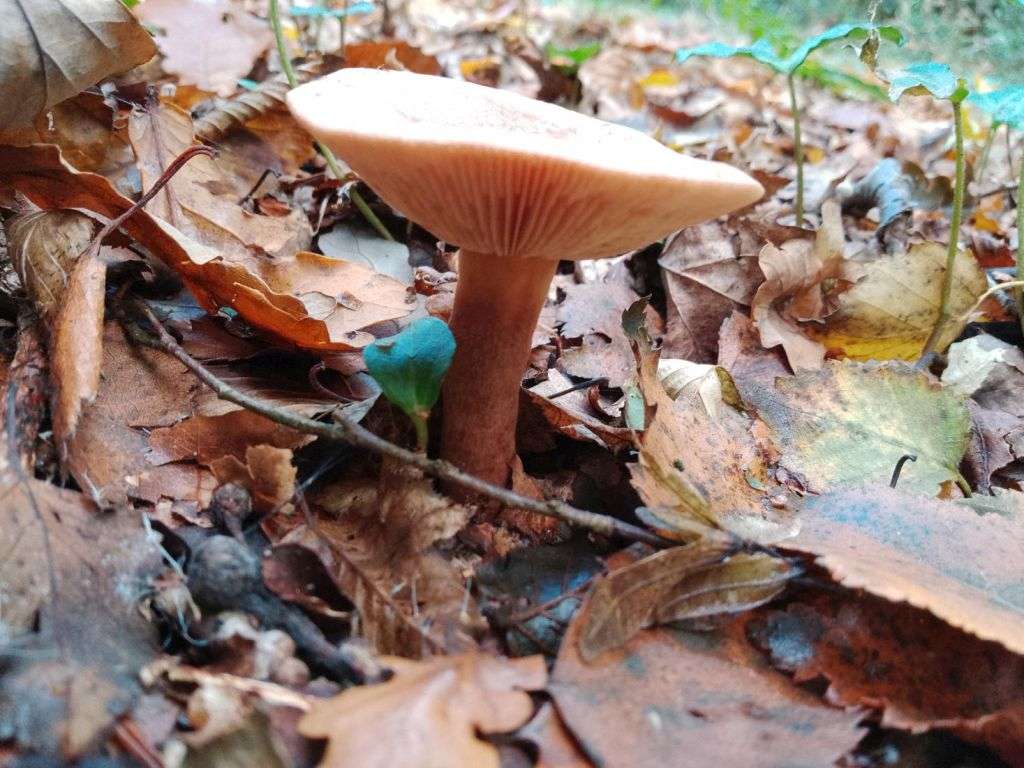
Hi All, Photo’s taken Oct 22, in mixed deciduous woodland, Devon. I’ve tentatively ID’d it as a Milk Cap, not at all sure which one. It has birch, oak and beech close by. I don’t think it’s the Beech Milk Cap.
Cap approx. 5cm (8cm max.) Dull pinkish with felted/woolly look, denticulate edge, depressed and slightly darker in middle. Gills; Pale pink, not crowded, decurrent and exuding thin “milk”. Stem; same colour, sturdy equal, rough appearance lower down, hollow.
[attachment=4]33b.jpg[/attachment] 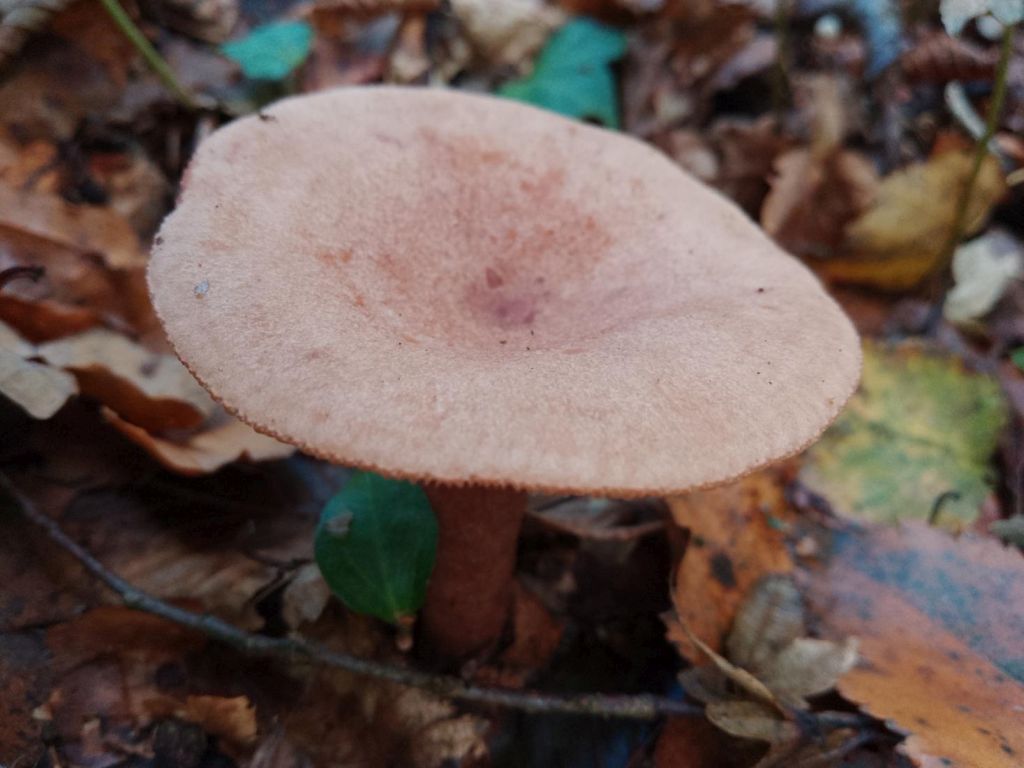
[attachment=3]33c.jpg[/attachment]
Note hollow stem, upper left;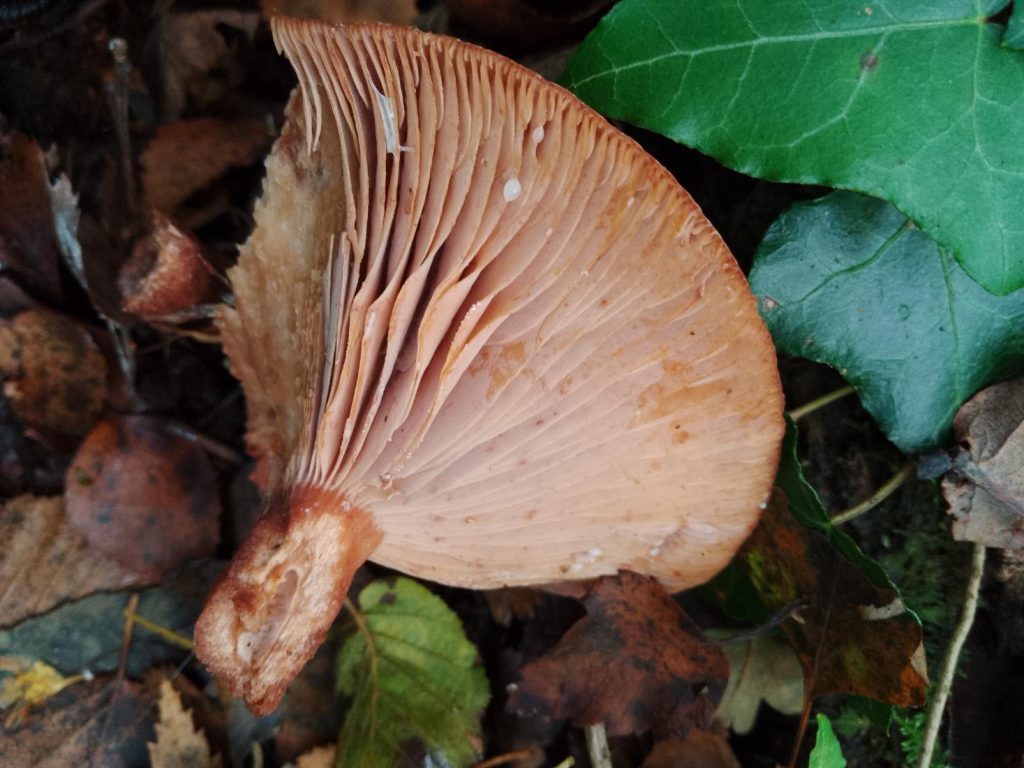
[attachment=2]33f.jpg[/attachment]
The following two photo’s were taken 5 days later and could be the Birch Milkcap?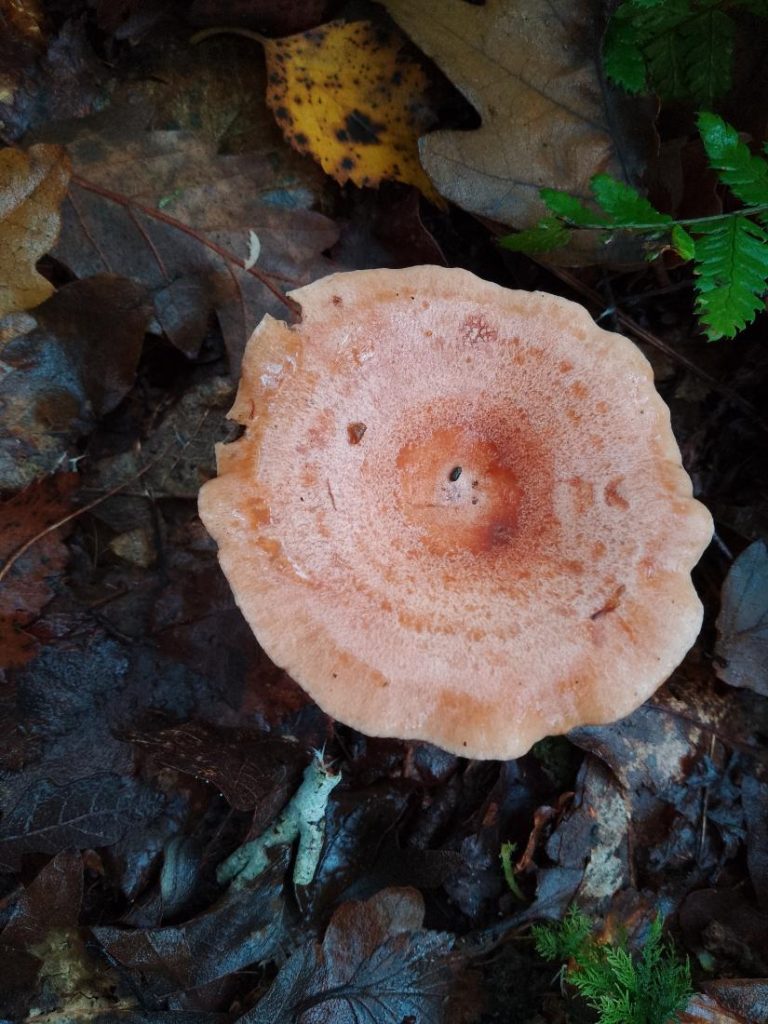
[attachment=1]33j.jpg[/attachment] 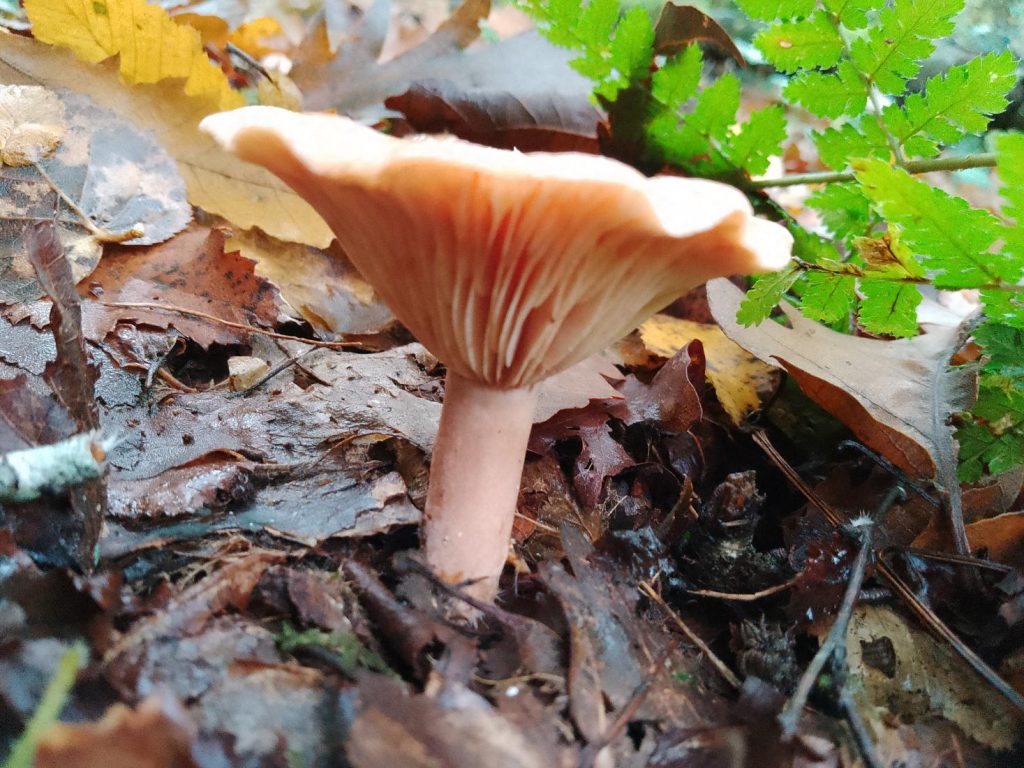
[attachment=0]33i.jpg[/attachment] Sorry, no spore prints,
Ali.
February 19, 2023 at 1:56 pm #45307Need to watch for milk colour change, which can be from minutes to hours. Also taste of milk and flesh.
Any smells?
February 19, 2023 at 2:02 pm #45308The lilac tinged zonate cap is note-worthy. If Alder was present, I’d be looking at L. lilacinus, but otherwise L. spinosulus.
February 21, 2023 at 10:45 pm #45309Thanks Adam, The last two pics were taken on a different day/location and as I’ve never noticed any Alder (I’ll check for Alder in spring) I am going to label it as L. spinosulus, The Lilacscale Milkcap. It seems to be uncommon.
The first 3 pics I thought might be L. tabidus (The Birch Milkcap) which is common, and there are a lot of birch trees. I think I overestimated the size. I will try to do better noting the colour changes of the milk, and also the rooting, (ie. soil not on wood).
All the best,
Ali
February 22, 2023 at 11:35 am #45310It’s also important to taste the milk/flesh, but only if you’re confident it’s a Lactarius. There are no dangerously poisonous Lactarius. February 23, 2023 at 2:52 pm #45311AliMD wrote:
Thanks Adam,The last two pics were taken on a different day/location and as I’ve never noticed any Alder (I’ll check for Alder in spring)
I am going to label it as L. spinosulus, The Lilacscale Milkcap. It seems to be uncommon. The first 3 pics I thought might be L. tabidus (The Birch Milkcap) which is common, and there are a lot of birch trees. I think I overestimated the size. I will try to do better noting the colour changes of the milk, and also the rooting, (ie. soil not on wood).All the best
Ali
Here isLactarius spinosulus(and it is indeed rather rare): 
[attachment=0]Lactarius spinosulus 0a.jpg[/attachment]
Key is the cap margin which should be very hairy. For what it’s worth I don’t think your fungus isL. spinosulus, and surely there’s little point in naming a collection down to species level with so little evidence to go on? Chris
February 23, 2023 at 10:45 pm #45312Hi, Thank you Chris for pointing that out, I don’t think my Lactarius is quite hairy enough, so L. lilacinus then? Or more likely L. tabidus.
Just to reassure you, any ID that is uncertain is in green, (completely unknown is red). In my list it’s green! At least I’ve pinned it down to “Lactarius”, haven’t I ?
Ali
February 24, 2023 at 4:46 pm #45313Hi Ali I apologise if this has been pointed out before, but Geoff Kibby’s book on the group
https://www.pemberleybooks.com/product/british-milkcaps-lactarius-lactifluus/27598/ ” class=”bbcode_url”> https://www.pemberleybooks.com/product/british-milkcaps-lactarius-lactifluus/27598/ Chris
February 24, 2023 at 8:29 pm #45314Hi Chris, I only have a very old Geof Kibby book, I’ve been using Roger Phillips latest and I had to get the magnifying glass out to see the scales on the L spinosulus pic. (g, p55), the cap looked so very convincing! There seem to be quite a few Lactarius to “choose” from, so it’s going down as an unknown. If I see it again this year I’ll be a bit more rigorous. I had no idea there would be so many fungi, and that they’d be so tricky to ID, or that I would get so obsessed!
All the best,
Ali
-
AuthorPosts


- You must be logged in to reply to this topic.