Forums › Forums › Fungi ID requests (post here if you aren’t sure what type of fungus you’ve found) › Cortinarius for ID
- This topic is empty.
-
AuthorPosts
-
November 3, 2015 at 7:15 pm #29926
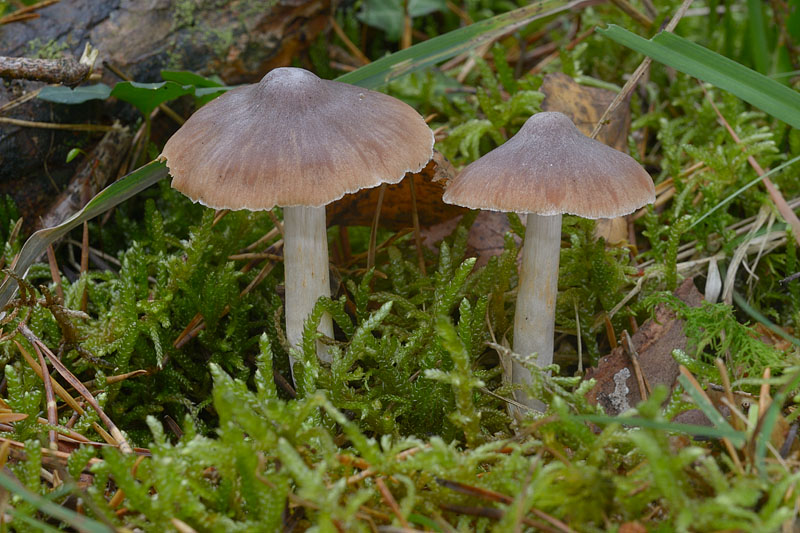
A Cortinarius with Pine, spruce (?) and a distant birch. Cap about 4cm, dry, silky, hygrophanous, reddish brown, conical, narrow umbo. Stem cylindrical white, faint rust veil remains, rooting. Gills brown, adnexed decurrent tooth as shown. Smell & taste non descript. Spores ovoid warty (7-  by (6-6.5) um2. KOH on stem flesh light yellow brown.
In situ:
[attachment=4]_DSC3832 Cortinarius 1.jpg[/attachment] 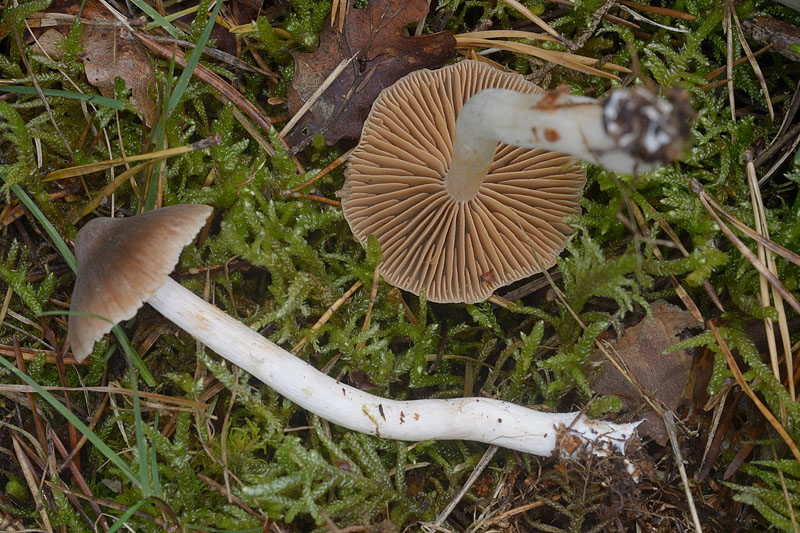
[attachment=3]_DSC3841 Cortinarius 1.jpg[/attachment] Basidioles with clamps [annotation corrected, thanks Chris]:
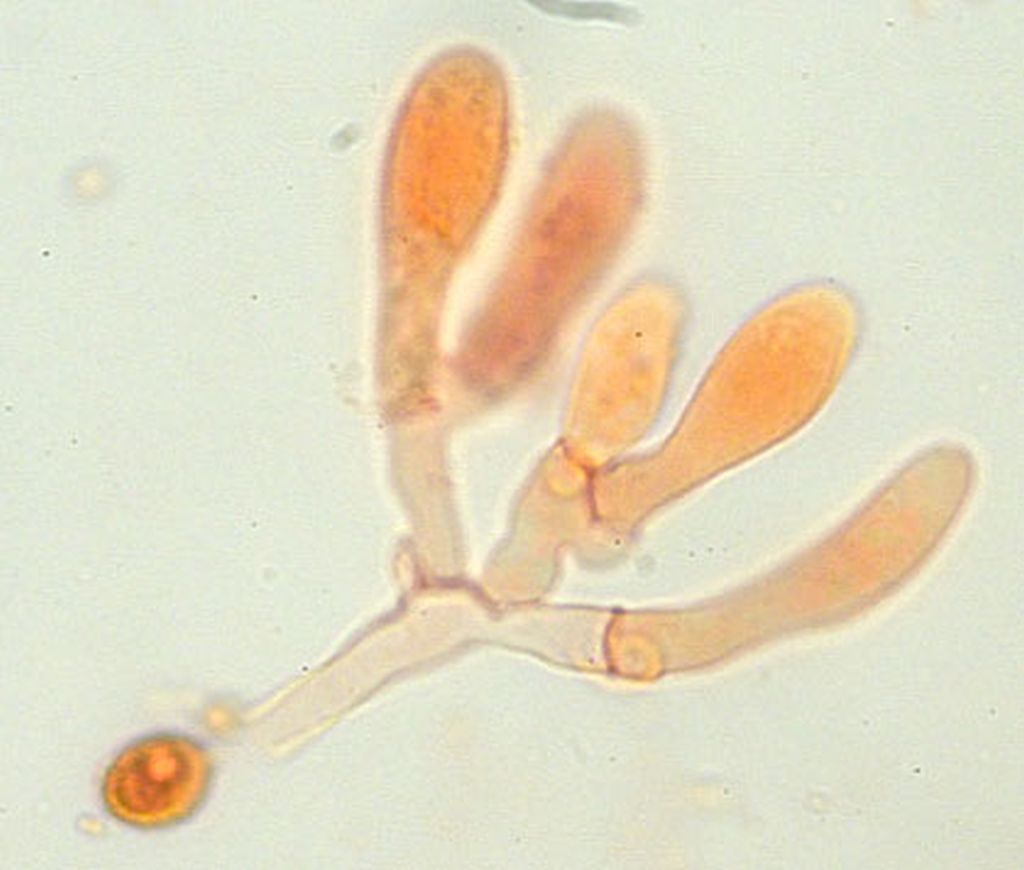
[attachment=2]_DSC3865 Cortinarius 1 Cystidia maybe.jpg[/attachment] Spores in Congo red x100:
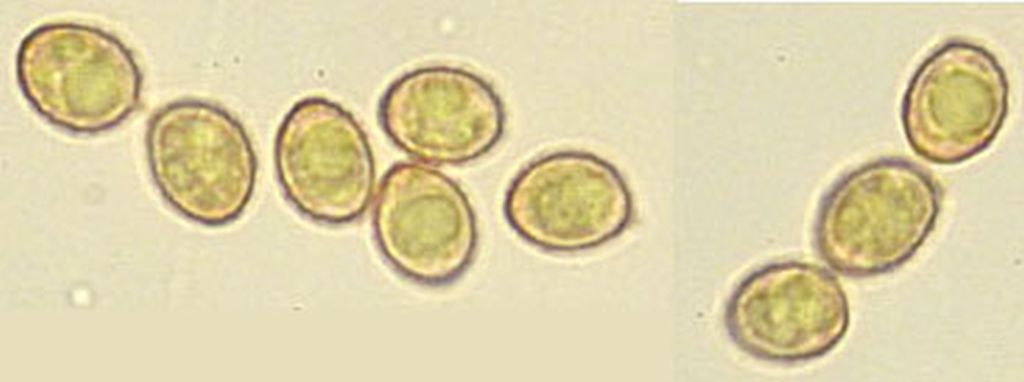
[attachment=1]_DSC3874 Cortinarius 1 spores x100 Congo red Composite.jpg[/attachment] Basidium in Congo red:
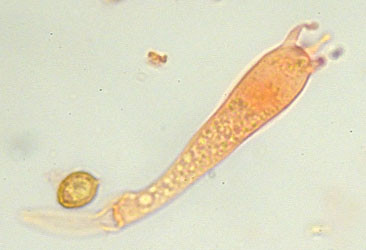
[attachment=0]_DSC3866 Cortinarius 1 basidium.jpg[/attachment] Presumably in the Telamonia group, and maybe the Obtusi section. Candidates include:
C obtusus: smell of iodoform, spores ellipsoid, narrow.
C albovariegatus: Spores (7-
by (5-6) um2, cap 1-4cm, smell radish like +/- iodoform. Gill edge frequently with numerous large cylindric to balloon shaped sterile cells. Most frequent in summer. Stem yellow brown. C acutus: small, spores ellipsoid, narrow.
C fulvescens: Spores ellipsoid, rough, 8.5-11 x 4.5-6.5 µm2. ?
C albovariegatus has similarities but the stem colour is out, and main season is summer.
November 3, 2015 at 7:17 pm #37219Pileipellis hyphae with clamps: 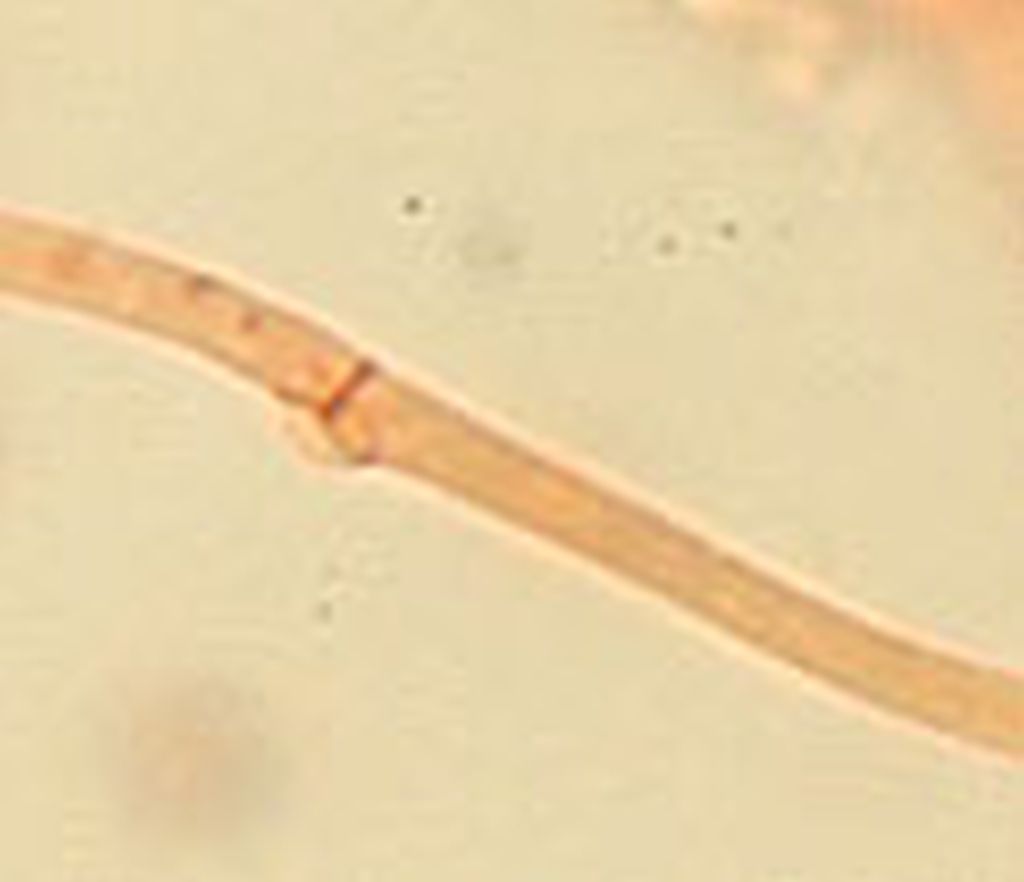
[attachment=1]_DSC3852 Cortinarius 1 cap hyphae.jpg[/attachment] Basidia (clamped base ?):
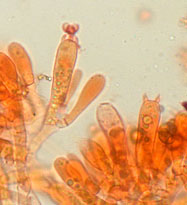
[attachment=0]_DSC3863 Cortinarius 1 basidia.jpg[/attachment] November 3, 2015 at 7:35 pm #37220Hi Leif does the third photograph not show clamped basidioles (I use the term in the sense of immature basidia)?
regards
Chris
November 3, 2015 at 8:41 pm #37221Corrected, thanks. November 9, 2015 at 6:41 am #37222Hello, in my opinion this is way too dark for a member of the Acuti/Obtusi (or acetosi in Funga Nordica).
I would look for this one in section Hydrocybe, may be in the vicinity of C. decipiens and such species.
Exceptional is the fine pruinose umbo, and even more surprising is that it seems to dehydrate in radial streaks and not in concentric circle.
best regards,
Andreas
November 9, 2015 at 10:22 am #37223Thank you Andreas, I will have a look in the Hydrocybe section. I am not hopeful of an ID. Shame, as I thought the photos turned out well. November 16, 2015 at 11:45 pm #37224Chris Yeates wrote:Hi Leif
does the third photograph not show clamped basidioles (I use the term in the sense of immature basidia)?
regards
Chris
I noticed in Fungi of Switzerland Vol5 that they have drawings of similar looking structures which they refer to as marginal cells. I can’t say if I know how to distinguish immature basidia from marginal cells, assuming they are not synonyms. Maybe you could explain since you clearly know.
-
AuthorPosts


- You must be logged in to reply to this topic.