
Slime Mould for ID
Forums › Forums › Myxomycetes (slime moulds) › Slime Mould for ID
- This topic is empty.
-
AuthorPosts
-
May 29, 2015 at 2:47 pm #29419
I don’t know a thing about slime moulds, so help with this is welcome more than ever. I doubt it could be identified to species level but genus would be nice! Found on a tree stump near a muddy stream which runs only when there’s been heavy rain. No smell which I could detect, but… a) I’m not sure slime moulds have smells and
b) I have a mild cold so my smelling is not up to scratch anyway!


[attachment=0]DSCN2066 r.jpg[/attachment]
The colour was a bit more silver, but I had to use flash seeing as I was in quite dense woodland.May 29, 2015 at 3:04 pm #34668Hi, It’s definitely a
Lycogalaspecies, at the “almost” fully mature stage. Earlier it would have looked something like those (orange-pink ones) in the first post on this thread: – http://fungi.org.uk/viewtopic.php?f=8&t=63 The two most likely species for your find are
L.epidendrumand L.terrestre. L.epidendrumhas more records than L.terrestre(and I certainly find it more than any other Lycogalaspecies). – but, one of the traits of L.terrestre is that the mature spore mass retains its pinkish hues – and the spore mass in your photo does look quite pink. However, to be confident, you would need to get a good mature sample under the microscope.
Regards,
Mike.
May 29, 2015 at 3:16 pm #34669Thanks Mike, A couple of questions:
Is the colour of the spore mass the colour of the fruiting body overall?
Do you want a photo of the fruiting bodies without flash? It will show the colour more truthfully but it is of poor quality.
And also I have no access to a microscope at all!
😯 
😳 May 29, 2015 at 3:29 pm #34670P.S. A pocket microscope won’t work, would it? I have a Natural History Museum one but it’s really basic, 20-40x magnification. What magnification would one need for spore examination? May 29, 2015 at 3:33 pm #34671The colour of the spore mass refers to the insides of the fruiting body, not the overall colour of the outside. 
In the case of
Lycogala’s, being that they are reasonably large, it’s easy enough to cut one open or squash one, to reveal the innards. However, although
L.terrestretends to retain a pinkish colour (inside), whereas L.epidendrumgenerally goes greyish-brown inside, L.epidendrumdoes sometimes exhibit similar pink-ish colours – which is why you really need the microscopy, and can’t be 100% confident from photos or just by looking at them in the field. No – a pocket microscope of 20-40x wouldn’t give you the detail you need to see. For spores in general, you need to be in the order of x400 minimum, and often up to x1000 (with oil immersion lens) to see spore ornamentation clearly.
Regards,
Mike.
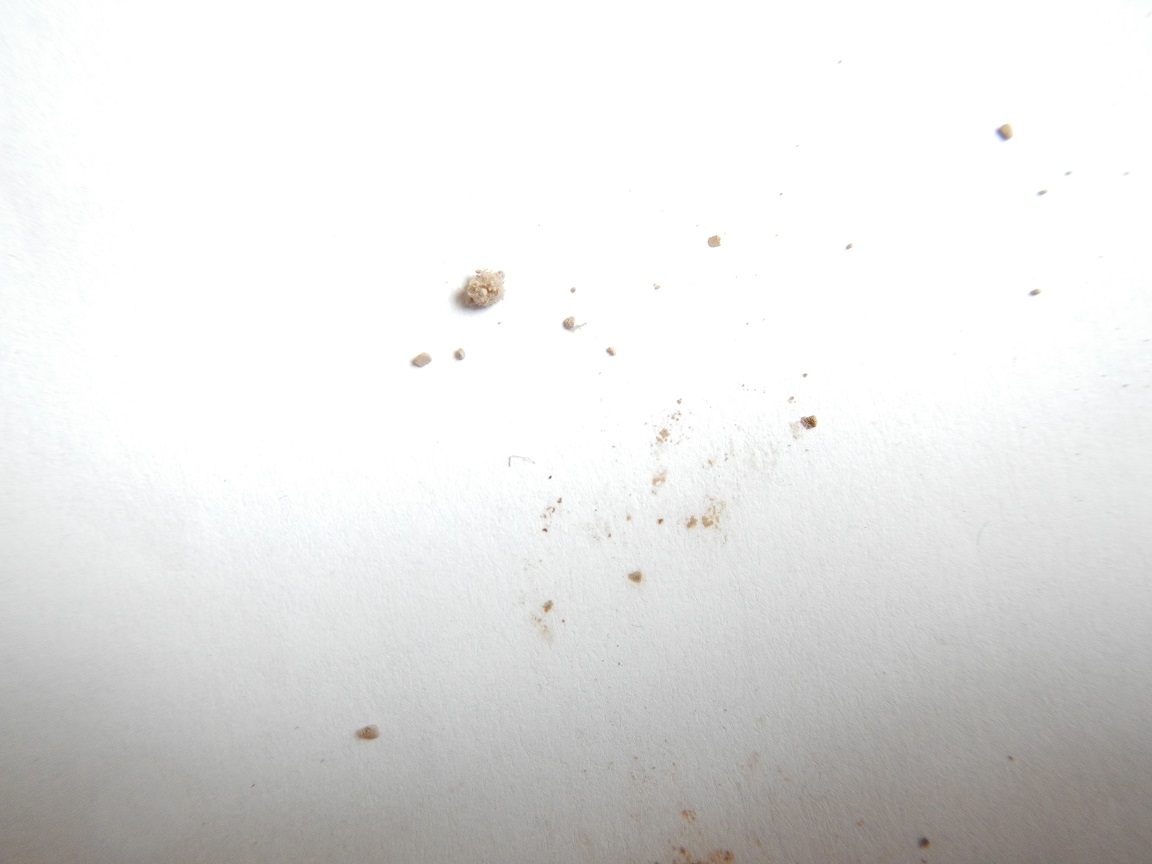
May 29, 2015 at 4:01 pm #34672I see what you mean now Mike, 40x would definitely not be enough. This is the view of the spores through my pocket microscope: 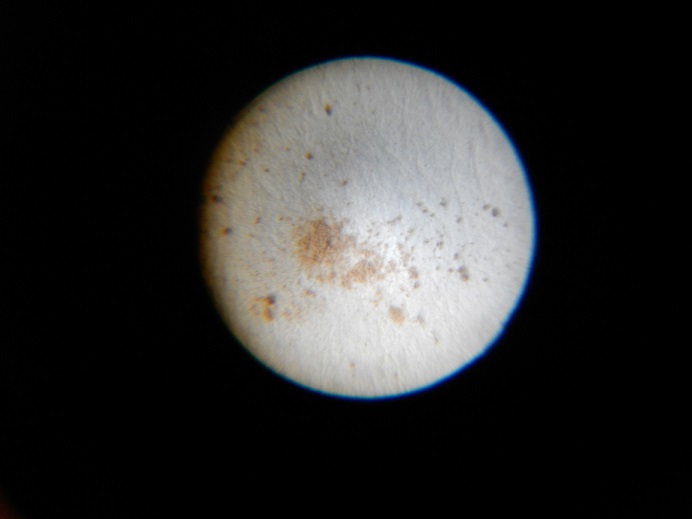
[attachment=1]DSCN2079 r.jpg[/attachment]
Is it pinkish enough?This is just a normal photo:
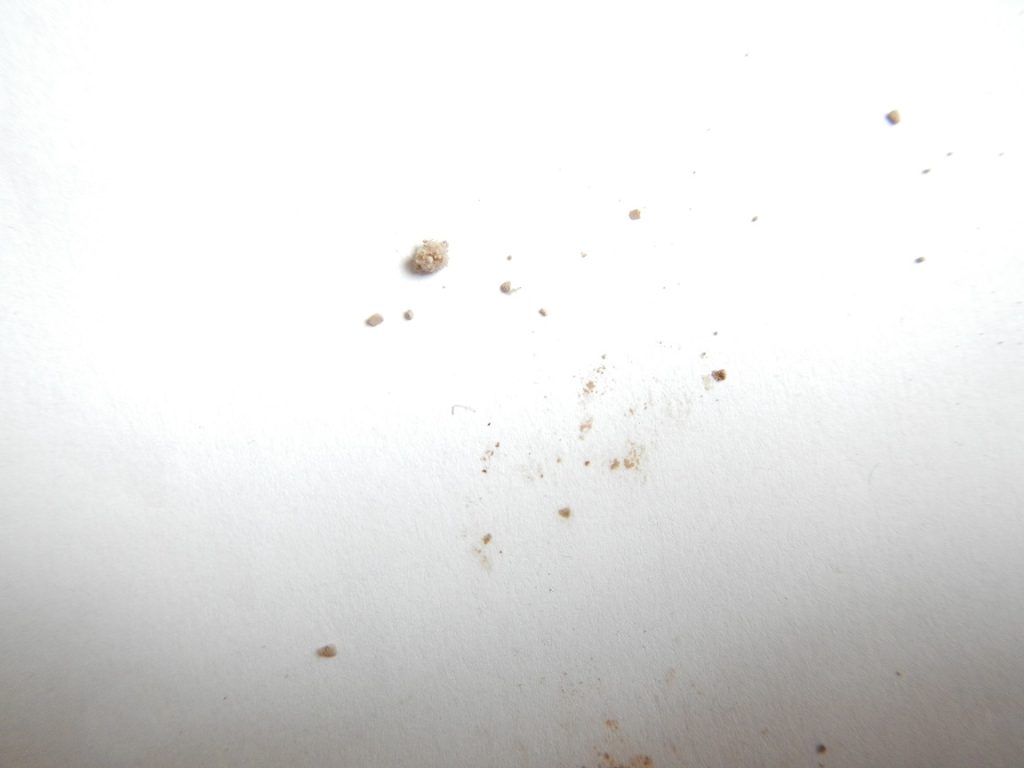
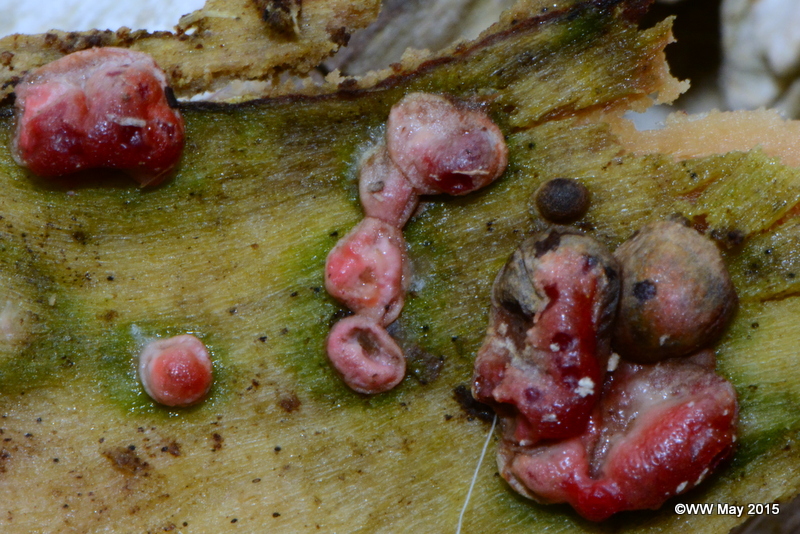
[attachment=0]DSCN2081 r.jpg[/attachment] June 3, 2015 at 7:40 pm #34673Interesting thread particularly as telling L. epidendrum and L. terrestre apart is fraught with problems .. Based on Mike’s theory that the spore mass of L. terrestre tends to be pinkish I assume (probably unwisely …
[attachment=1]DSC_0112.JPG[/attachment] 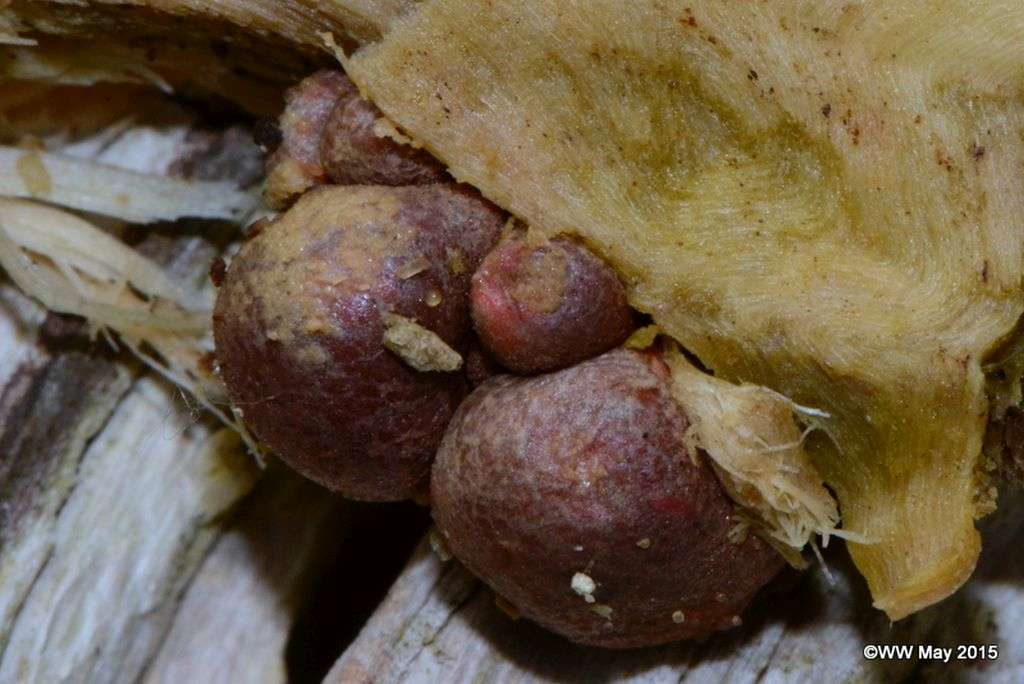
[attachment=0]DSC_0113.JPG[/attachment] regards
John
-
AuthorPosts



- You must be logged in to reply to this topic.